F.P. Journe

Don't hesitate to ask for any additional information, Alex is ready to assist and guide you in your decision
DETAILS
François-Paul Journe is one of the few watchmakers to have developed a wristwatch with a twin movement and resonance effect. Resonance is a physical phenomenon of interaction between two independent systems, characterized by oscillations at frequencies close to each other. In the case of strong resonance, both systems begin to vibrate at the same frequency, i.e. in the case of watch movements, the two movements move synchronously. Mechanical resonance in clocks was discovered in the 17th century by the famous Dutch scientist Christian Huygens, before the French clockmaker Antide Janvier was able to use this effect for the first time in a pendulum clock in 1780 and Abraham-Louis Breguet incorporated it into a pocket watch in 1814. François-Paul Journe began experimenting with resonance in his early pocket watch in 1983, but success in applying this physical phenomenon did not come until later, when he developed the Chronomètre à Résonance wristwatch in the late 1990s. Its resonance caliber uses the aerodynamic interaction of the balance wheels of the twin movement. This is currently the only brand to offer wristwatches with an aerodynamic resonance system.
The unlimited production of the Chronomètre à Résonance watch series began in 2000 featuring the caliber 1499 (1st generation) with a rhodium-plated brass mainplate and bridges. At the end of 2004, F. P. Journe began production of the caliber 1499.2 (2nd generation), in which the mainplate and bridges are made of solid 18k gold. The second-generation watch was nicknamed Résonance Nouveau, which is why the reference is called RN.
REASONS TO BUY
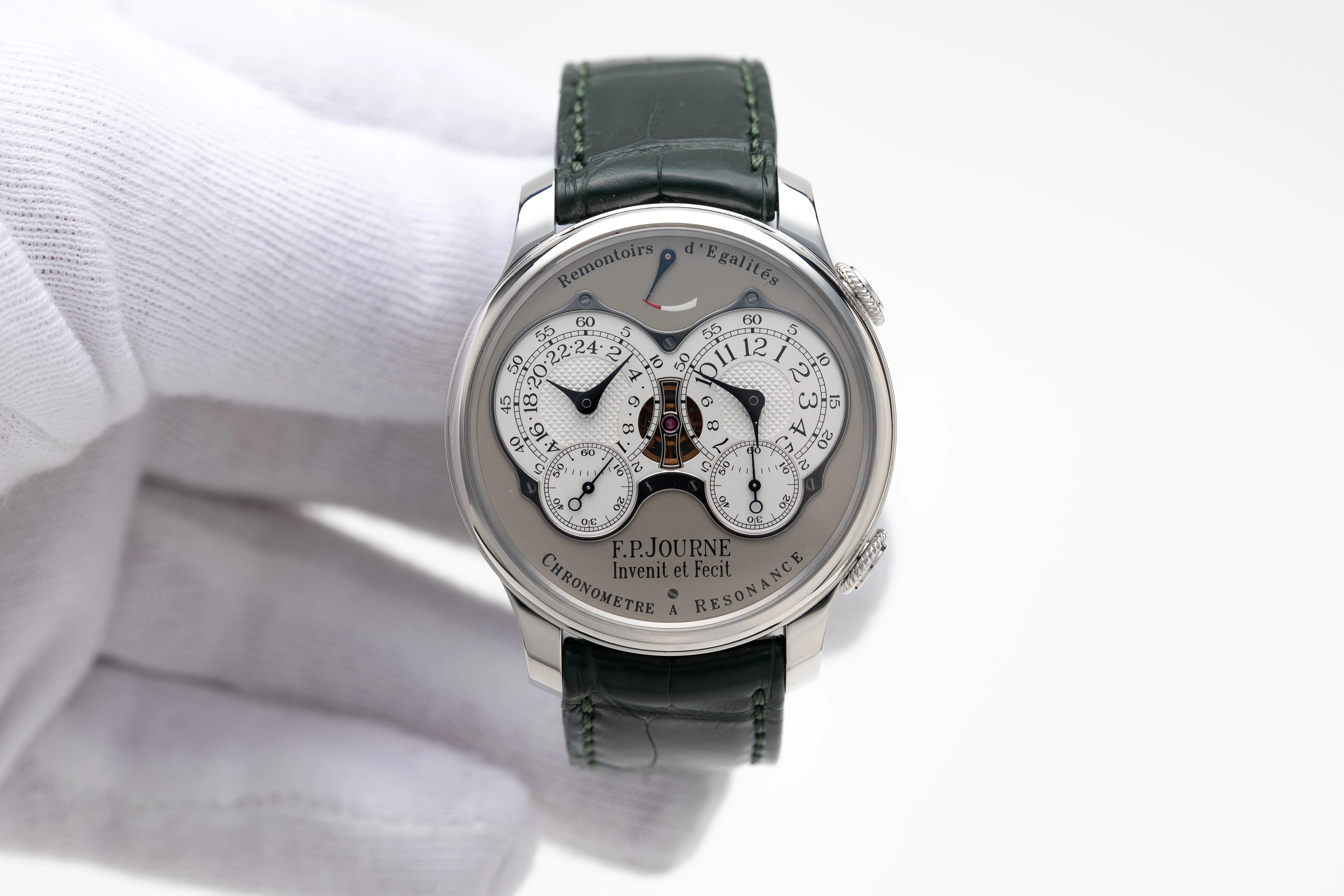
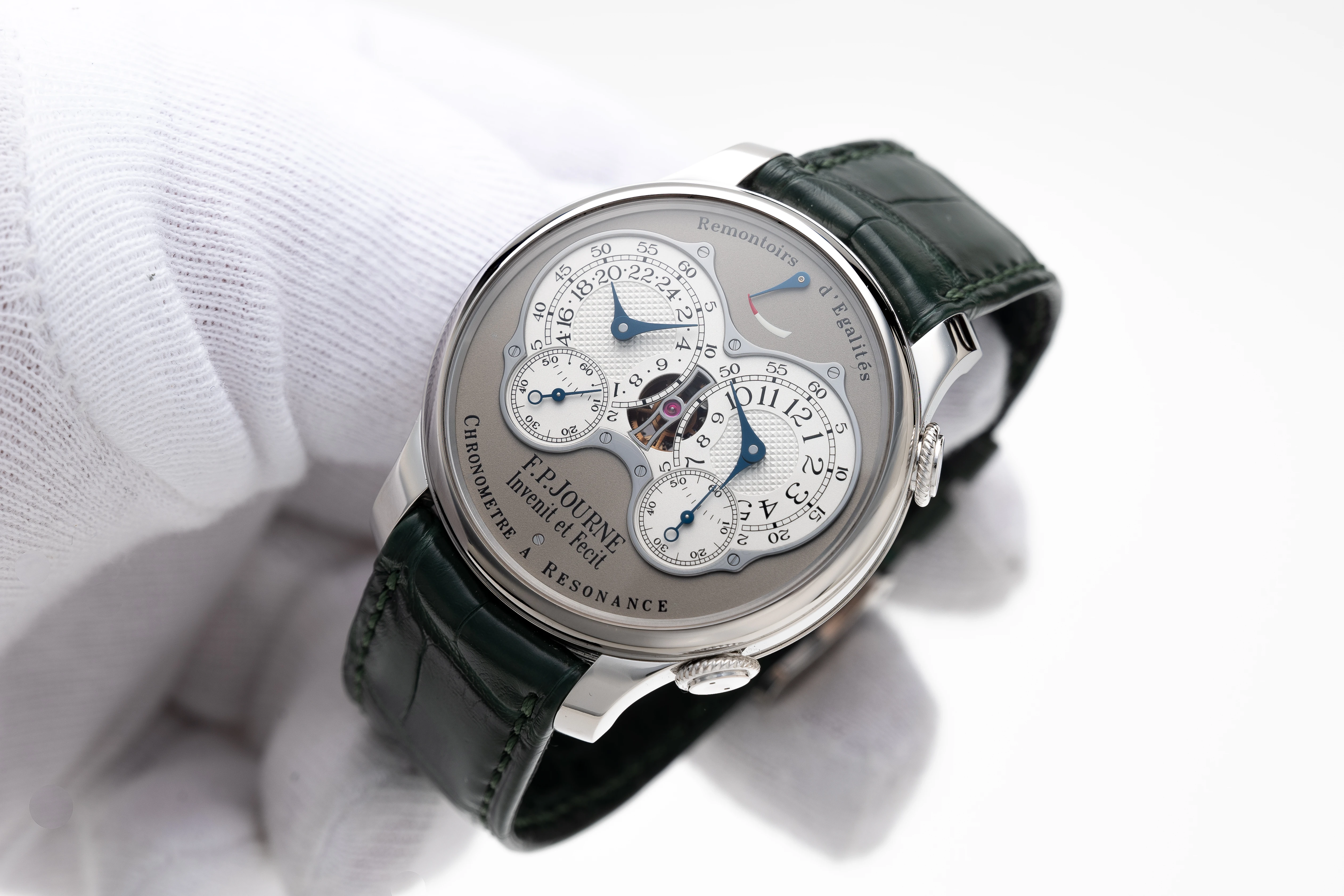
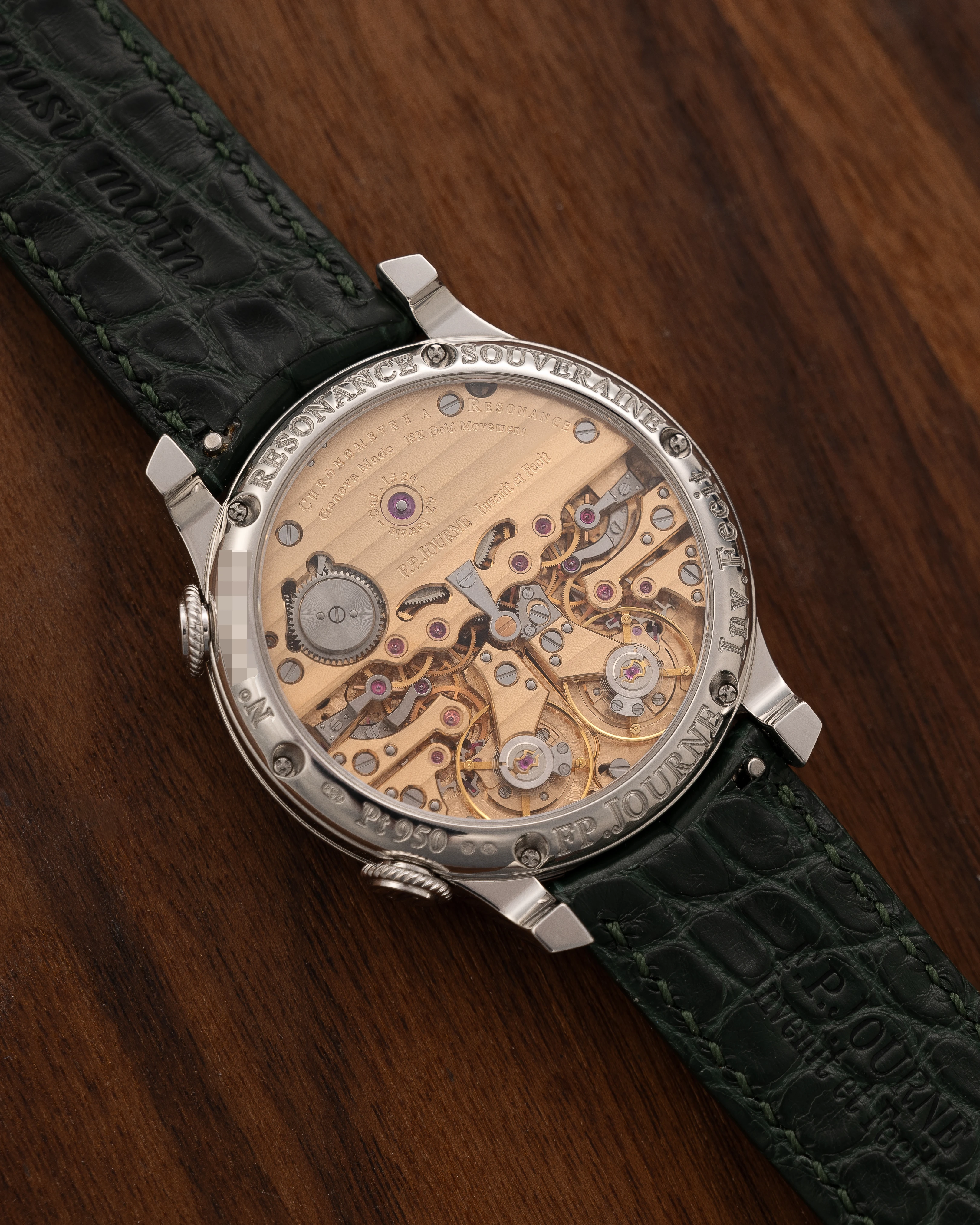
The Chronomètre à Résonance in platinum No. 248RQ is the most complex member of the F.P. Journe line of resonance wristwatches, which in our opinion promises excellent collector's prospects for this watch. It features a beautiful hand-wound caliber developed to a high standard and finished by hand in all parts, including chamfering and polishing, with a solid 18k rose gold mainplate and bridges finely decorated with Côtes de Genève and perlage. The symmetrical dial with blued steel ‘hands and Arabic numerals, designed by François-Paul Journe himself, reflects the functionality of the intricate mechanical resonance movement with differentiated energy distribution and two built-in remontoirs d’egalite. This is a true masterpiece of complex micromechanics that will always be held in high esteem by true connoisseurs of luxury watchmaking.
ABOUT THIS WATCH
Later, in 2006, the caliber 1499.2 was replaced by the modernized version 1499.3, also in solid gold, with a modified winding module and with 40 instead of 36 jewels in the 1499.2. In 2010, on the occasion of the 10th anniversary of the Chronomètre à Résonance, François-Paul Journe presented the new Ref. RT (Résonance Trois) with the left-hand subdial, which was intended for the digital 24-hour time zone display. This watch was discontinued in 2020. In 2019, a very rare version of the Ref. RT appeared with a left-hand subdial in the early design with hour and minute hands, but with the hour hand set to the 24-hour time display.
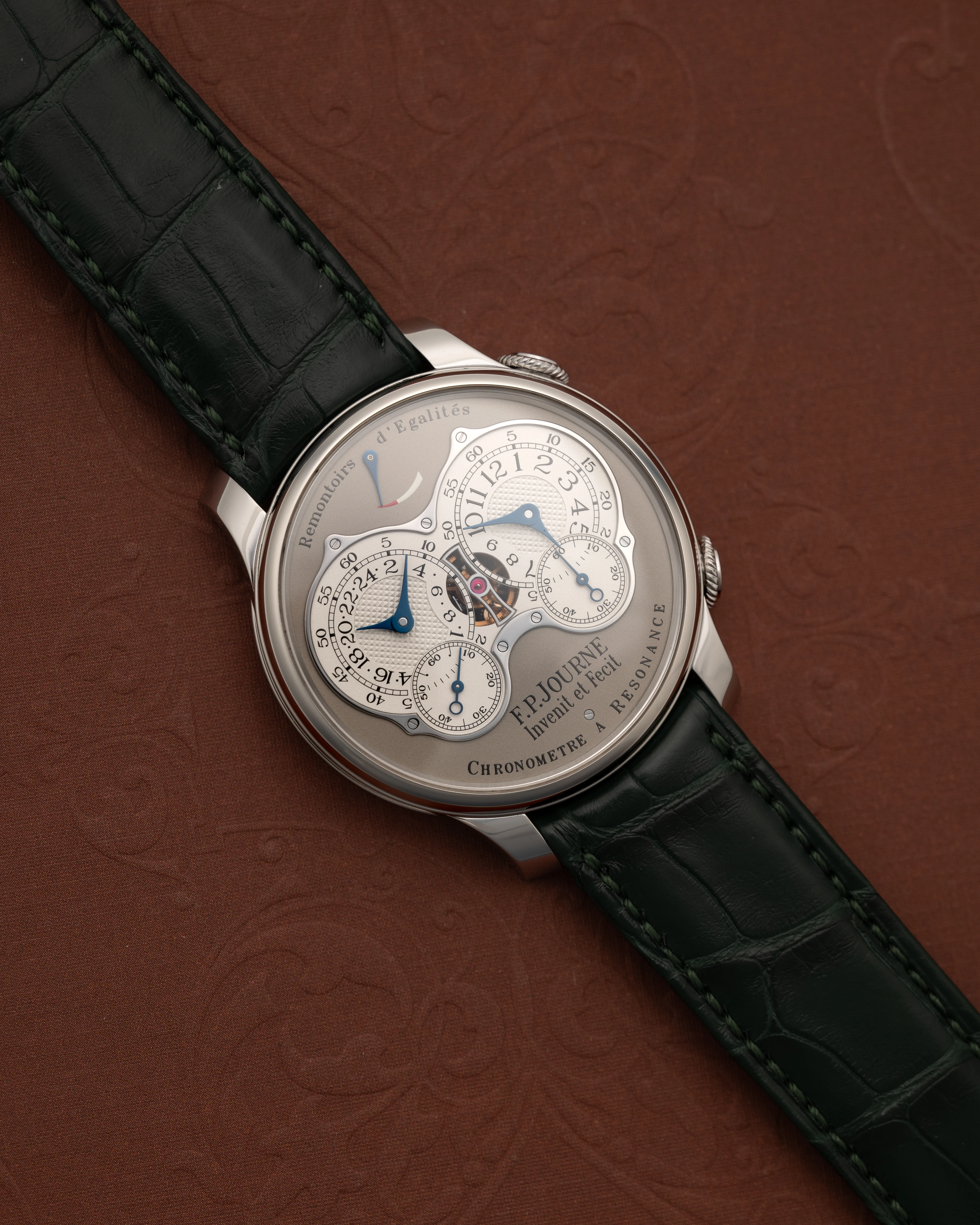
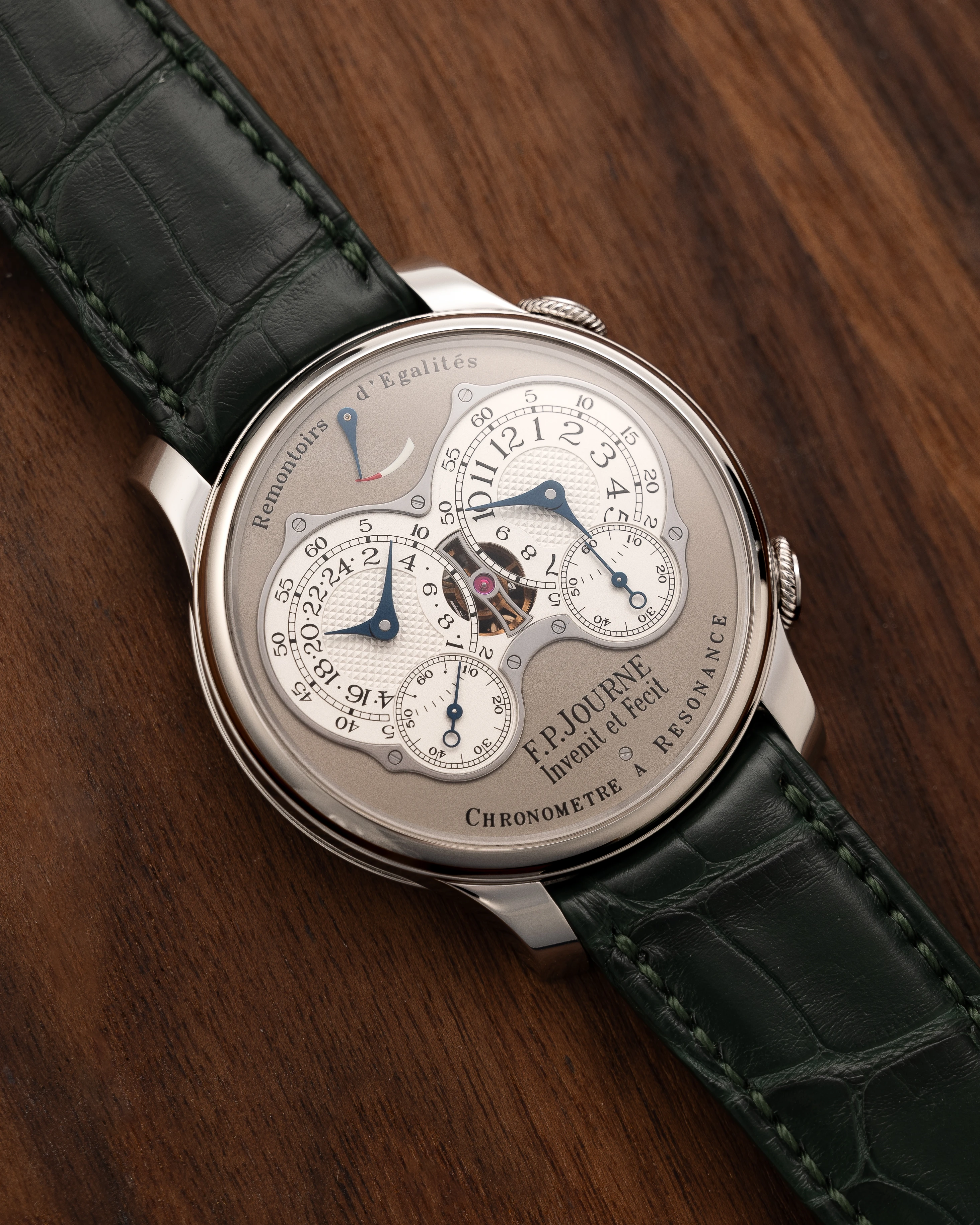
2020 marks a new important milestone, the 20th anniversary of the Chronomètre à Résonance. François-Paul Journe has revisited his iconic resonance complication and created a new version with two integrated remontors d’egalite, the Ref. RQ (Résonance Quattro). This watch, offered here in a 40 mm platinum 950 case, is powered by a significantly more complicated caliber 1520 and has a correspondingly modified design. In particular, a window in the center of the dial has been left open to reveal the differential that distributes the energy between the two gear trains, as this caliber has only a single barrel (previously, all Chronomètre à Résonance had two barrels). On the dial, we see a small power reserve indicator and the inscription “Remontoirs d’egalite”, both symmetrically arranged.
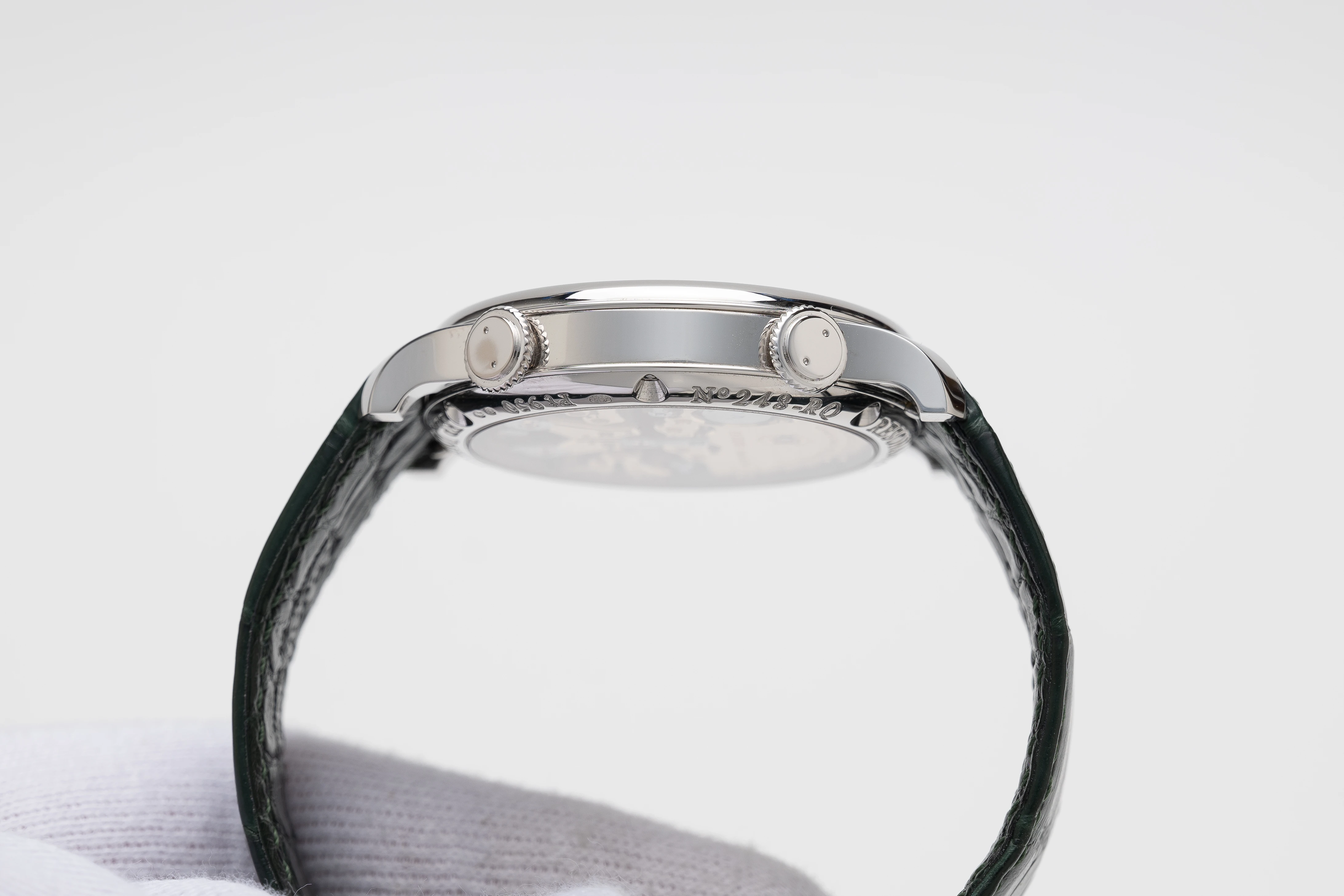
In addition, the position of the crowns has changed; they are now at 2 and 4 o’clock, which certainly makes the watch more comfortable to use, as in previous versions the winding crown was located between the upper lugs, while the crown for resetting the seconds and synchronizing the sub-dials in the same position. The addition of two remontoirs d’egalite to the Chronomètre à Résonance movement, which was dedicated to precision from the outset, seems entirely justified and certainly enhances the value of the watch, which has been given a unique and highly complex version of the rare resonance complication. The functions of the sub-dials repeat the layout used in the last version of the Ref. RT from 2019, i.e. on the left dial we find the time display with a 24-hour hand. Despite the significant increase in complexity, the Ref. RQ has retained its elegant proportions with a thickness of 11 mm and is only 2 mm thicker than the Ref. RT.

Specifications
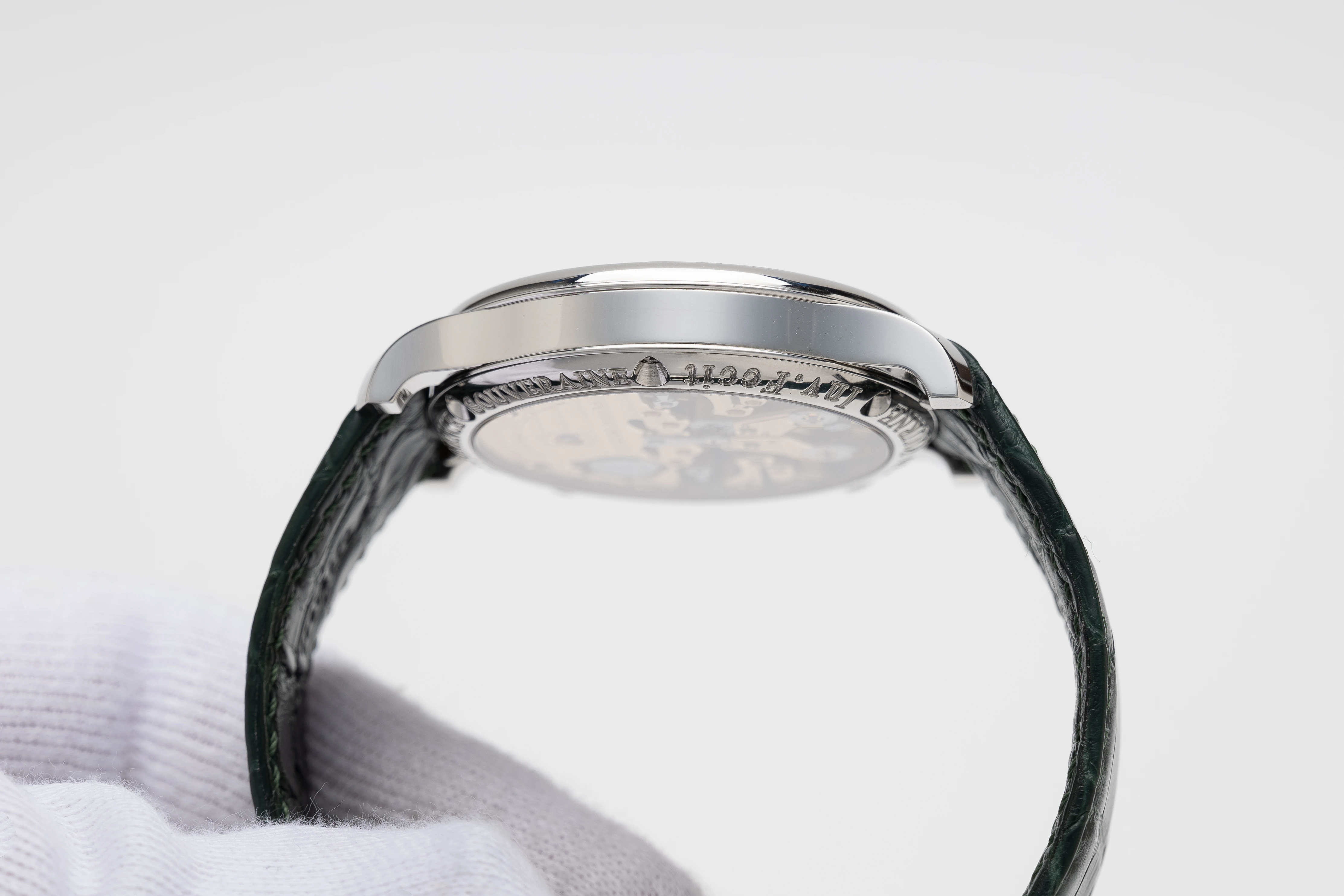
| Case | Platinum case 950/1000, sapphire caseback, winding crown at 2 o'clock, pulled down flyback crown at 4 o'clock |
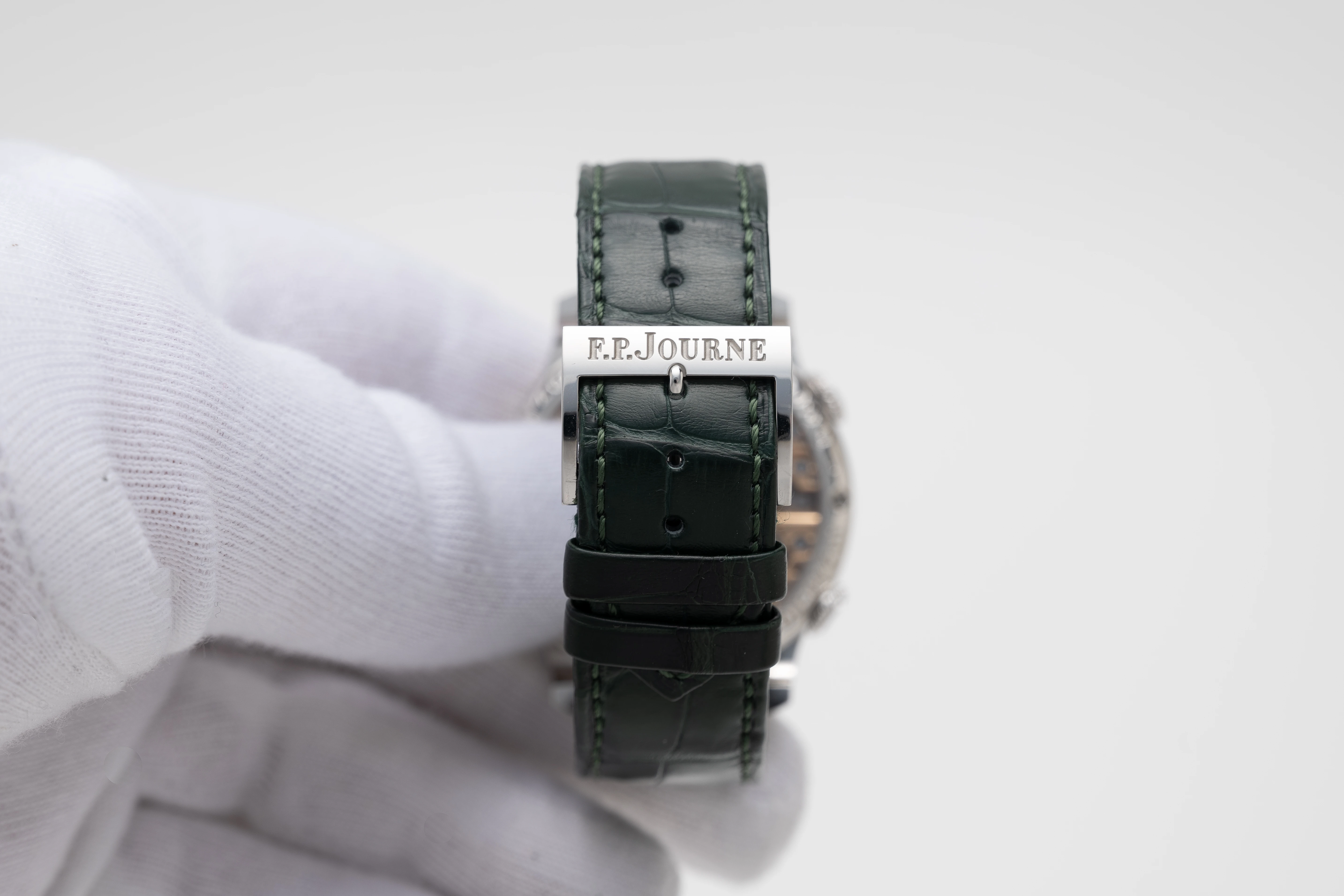
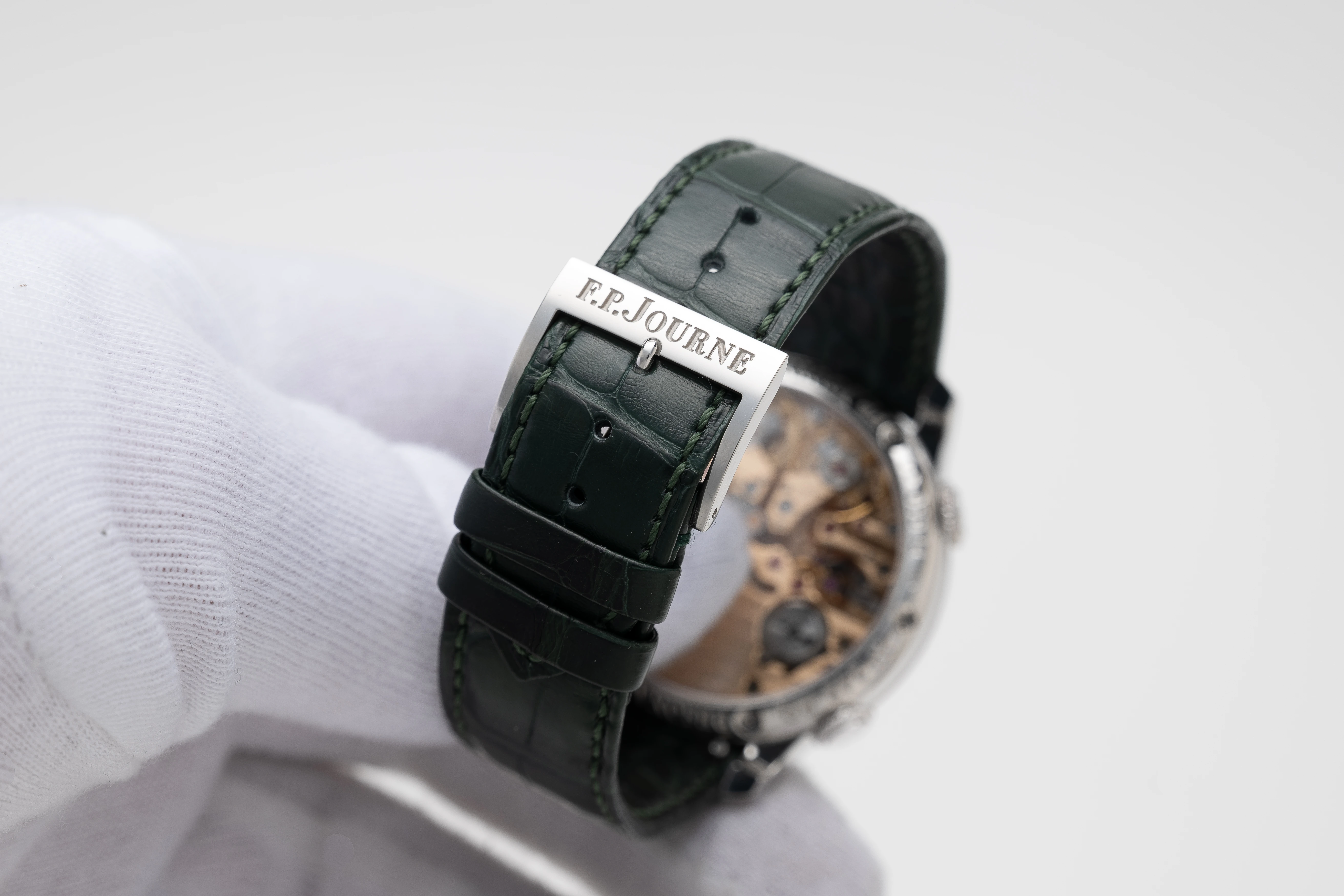
| Strap | Original Alligator strap, with a original platinum pin buckle |
| Dial | grained white gold dial, with 2 symmetrical silver time indications, power reserve indicator at 12 o'clock, blued polished hands |
| Movement | Massive hand wound rose gold movement with horizontal Geneva stripes, 2 individual gear trains |
| D= | 40 mm |
Condition report
| Case: | Mint |
| Strap: | Brand new |
| Dial: | Mint condition |
| Movement: | All functions working properly |
| Amplitude (Dial on top/Lift angle 52): | Approx 320° |
| Accuracy (Dial on top): | Approx +2 sec/day |
| Box: | Yes |
| Papers: | Yes |
ADDITIONAL PHOTOS: