Vianney Halter

Don't hesitate to ask for any additional information, Alex is ready to assist and guide you in your decision
DETAILS
When Vianney Halter, then an aspiring independent watchmaker, introduced the Time Machine Perpetual Antiqua watch in 1998, the impact on the community was astounding – no one could have imagined that a modern mechanical wristwatch could be so unconventional. The round case featured four dials for time and perpetual calendar displays, each shaped like a porthole, with three extending far beyond the outline of the case. The mysterious impression was heightened when it was revealed that the watch was actually very thin and sat closely against the wrist, which remains rare today, as the trend toward large wristwatches that began in the early 2000s has often led to the release of very thick watches.
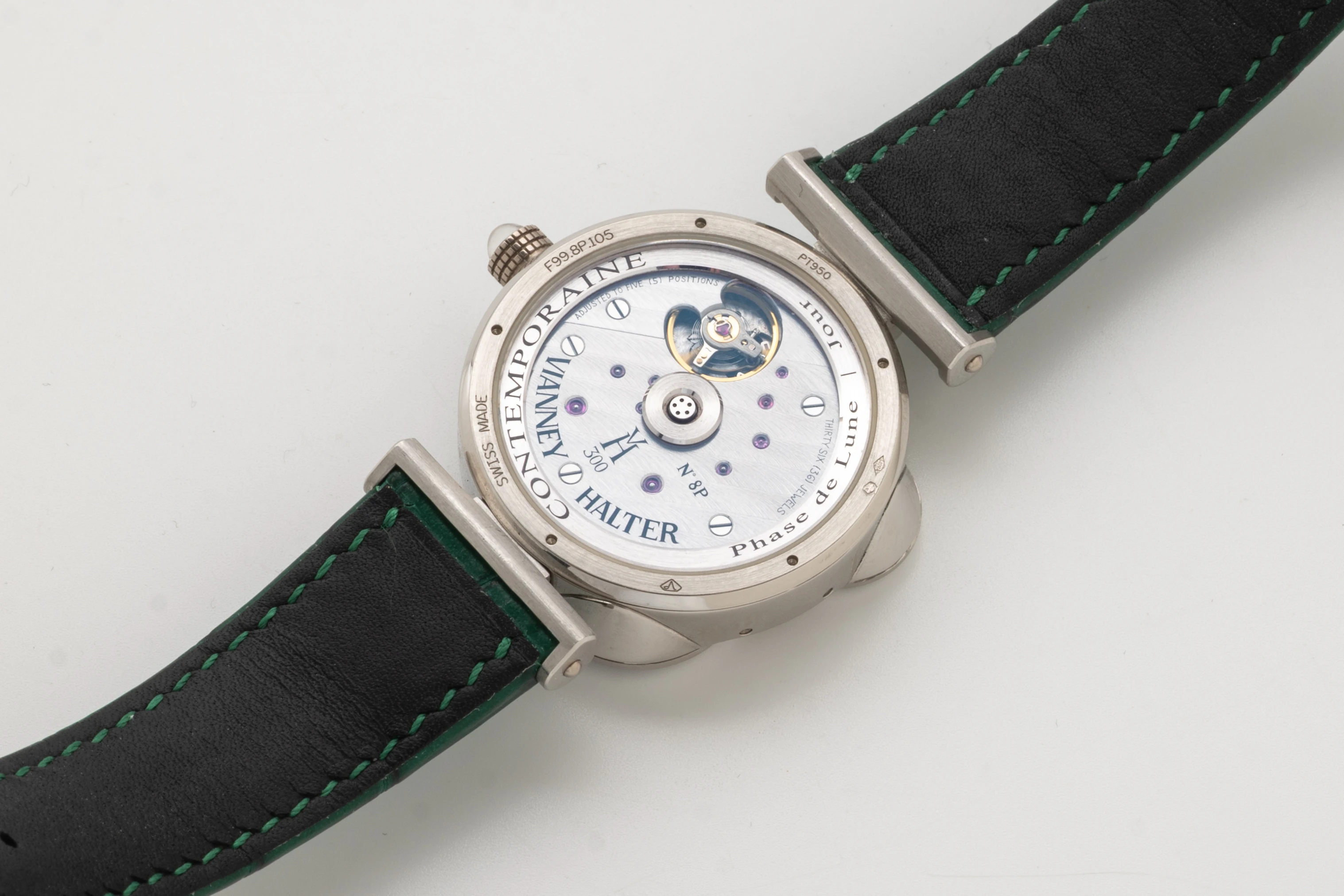
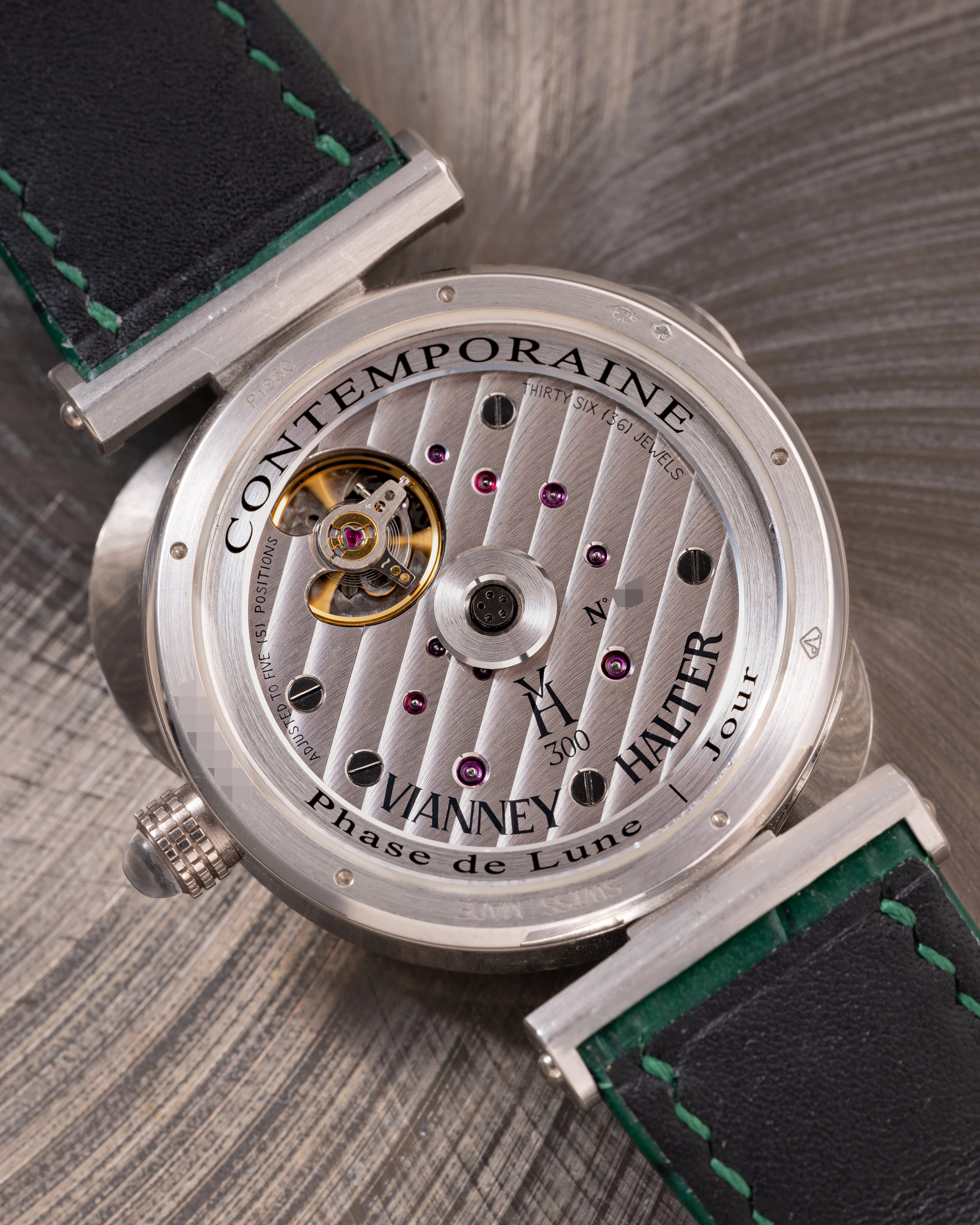
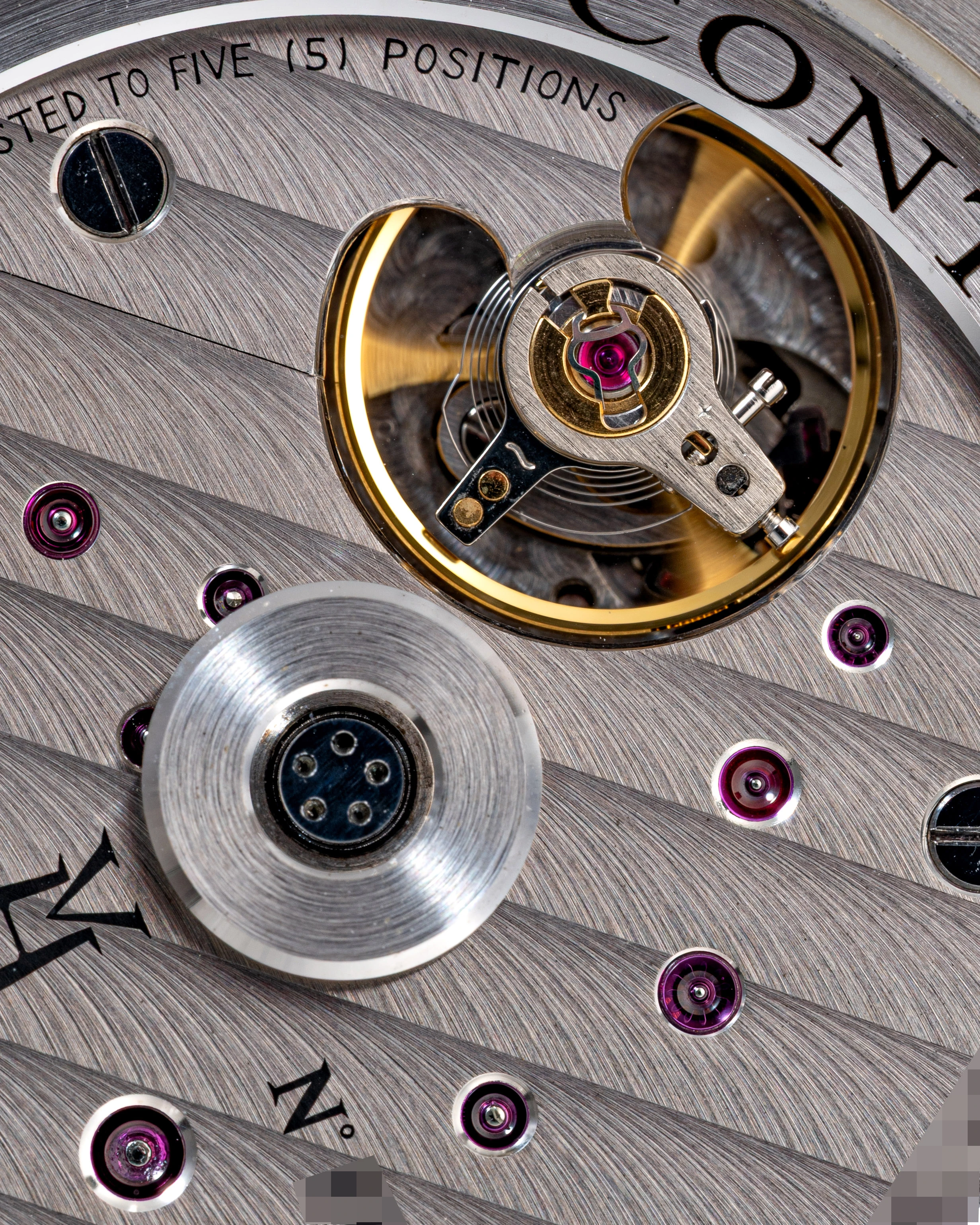
Vianney Halter developed the VH198 caliber, visible through the sapphire caseback, based on the Nouvelle Lémania 8810 self-winding movement. Halter used this movement as the donor for the mainspring barrels, gear train, automatic winding module, and escapement with balance wheel, while making all other parts specifically for the Antiqua movement, named VH198. As a result, there are virtually no externally visible signs of the original caliber. He employed a distinctive “mysterious” design for the movement, giving it the appearance of full plate construction instead of the traditional scheme with separate bridges used in the 8810. In fact, the VH198 has two bridges, almost invisibly adjacent to each other. The most surprising design element of the VH198 caliber is the winding rotor with the “mysterious mass,” patented by Halter in 1999 (patent no. WO9957613), although this did not prevent the Japanese brand Seiko and later the Swiss brand Swatch from using the design. The central disc of the rotor is made of transparent sapphire crystal with an external heavy eccentric ring mass, allowing the rotor to fully reveal the movement and make it appear hand-wound – which is why it is referred to as “mysterious.”
REASONS TO BUY
This Contemporaine Moon Phase in 950 platinum represents an extremely rare and intriguing chapter in the history of independent watchmaker Vianney Halter, reflecting an effort to establish a new visual identity as an alternative to the popular retro-futuristic style of the Antiqua watch. At the same time, the Contemporaine Moon Phase maintains the high technical standards of other Vianney Halter releases, particularly its immediate predecessor, the Antiqua. To our knowledge, the Contemporaine Moon Phase has not appeared for sale at major auction houses, making the availability of this example a rare opportunity to acquire an exceptional piece.
In later models, including the Contemporaine, with two modernized versions of the Antiqua design launched in 2000 (the Contemporaine Perpetual Calendar made for the Rotshild family) and 2001 (the Contemporaine Moon Phase; this watch). Vianney Halter conceived the Contemporaine as an alternative to the Antiqua, which had been a sensation, but he needed to move forward. The Antiqua’s distinctly retro-futuristic design had won the hearts of collectors and connoisseurs, and there seemed to be no room for the modernist version of this design that Vianney Halter implemented in the Contemporaine – one without the repeating motif of cylinders, neat rows of rivets, or the old-style hand-engraved numerals, logo, and scales. Both attempts to create a “modern Antiqua” were far less successful than the Antiqua itself, which, now that production has ceased, is once again winning over collectors, this time with impressive results at auction. It may seem that the Contemporaine receives less attention, but this is simply because production of the two Contemporaine versions was significantly smaller than that of the Antiqua. The Contemporaines simply do not appear on the market; in particular, neither version has been found at leading watch auctions, including Antiquorum, Bonhams, Christie’s, Phillips, or Sotheby’s. Only 2 or 3 pieces were made from our knowledge all in different variations in white gold and platinum cases.
ABOUT THIS WATCH
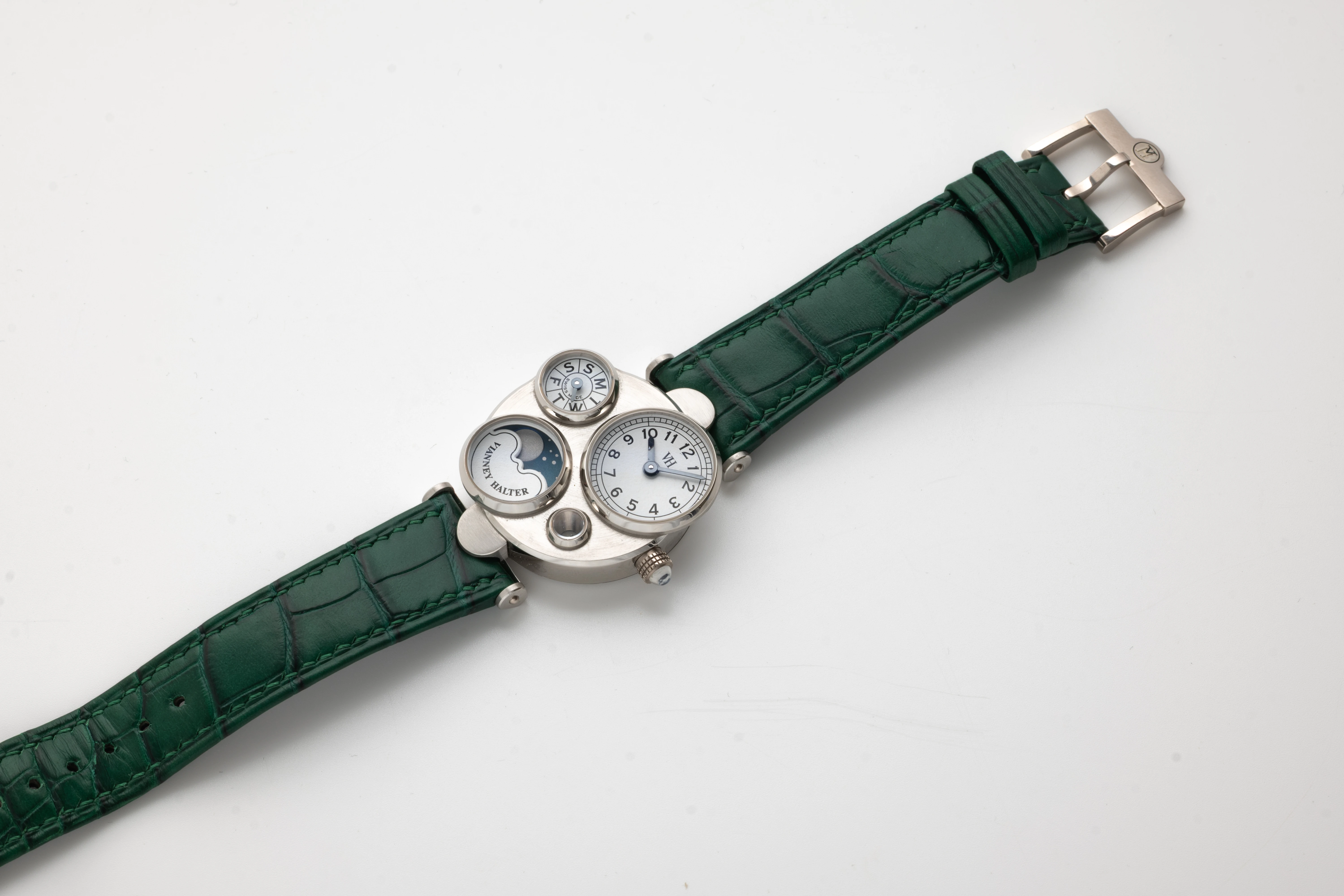
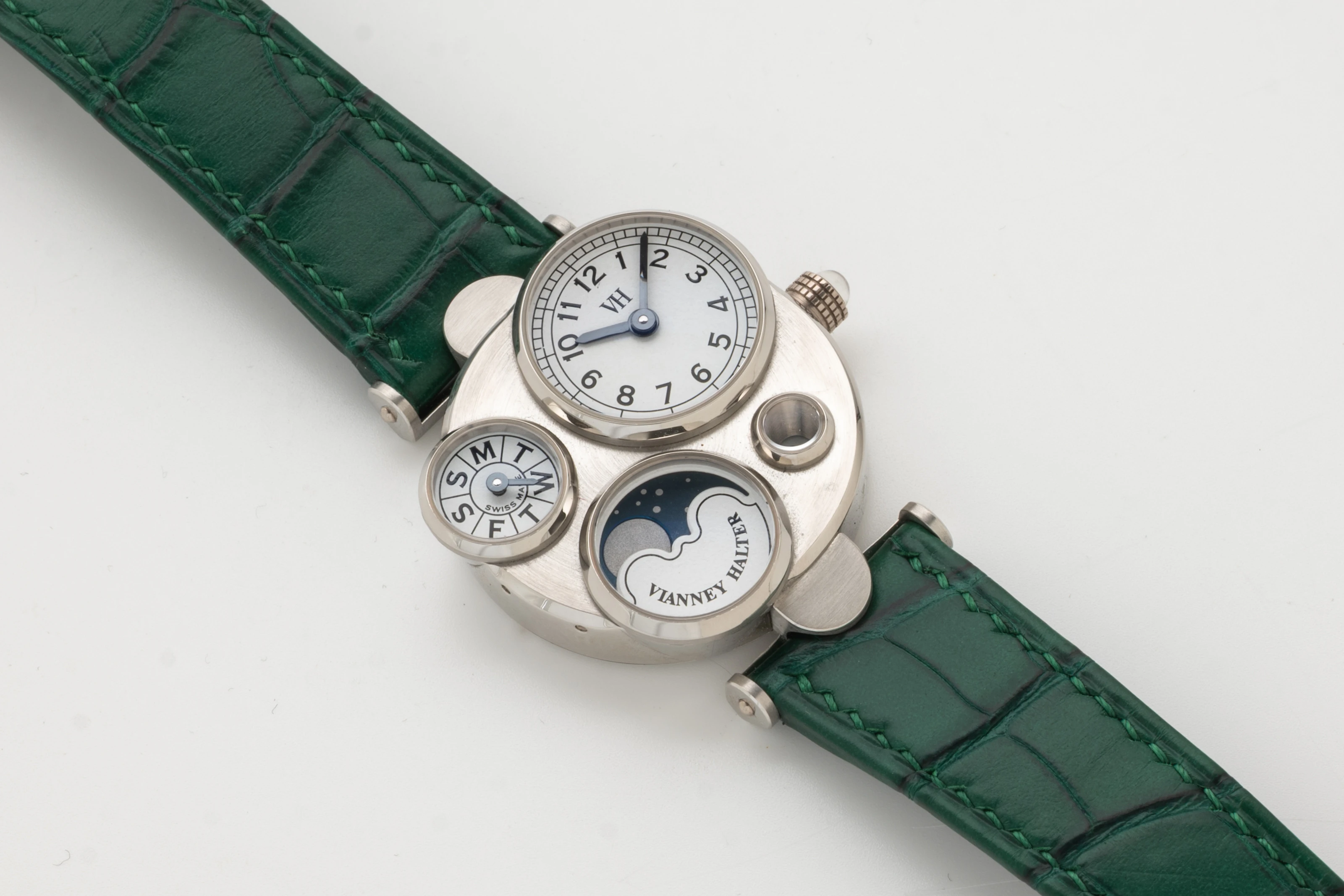
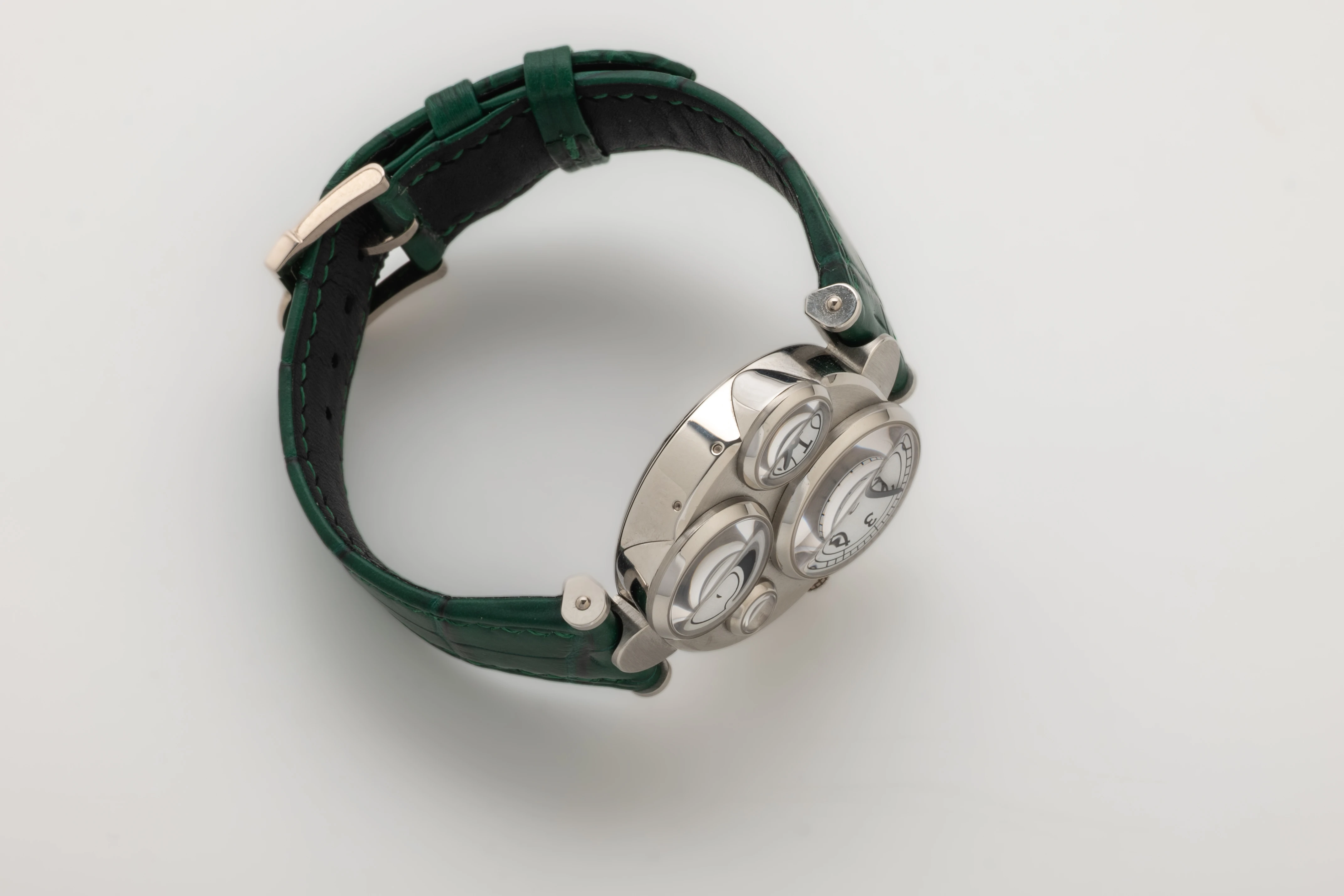
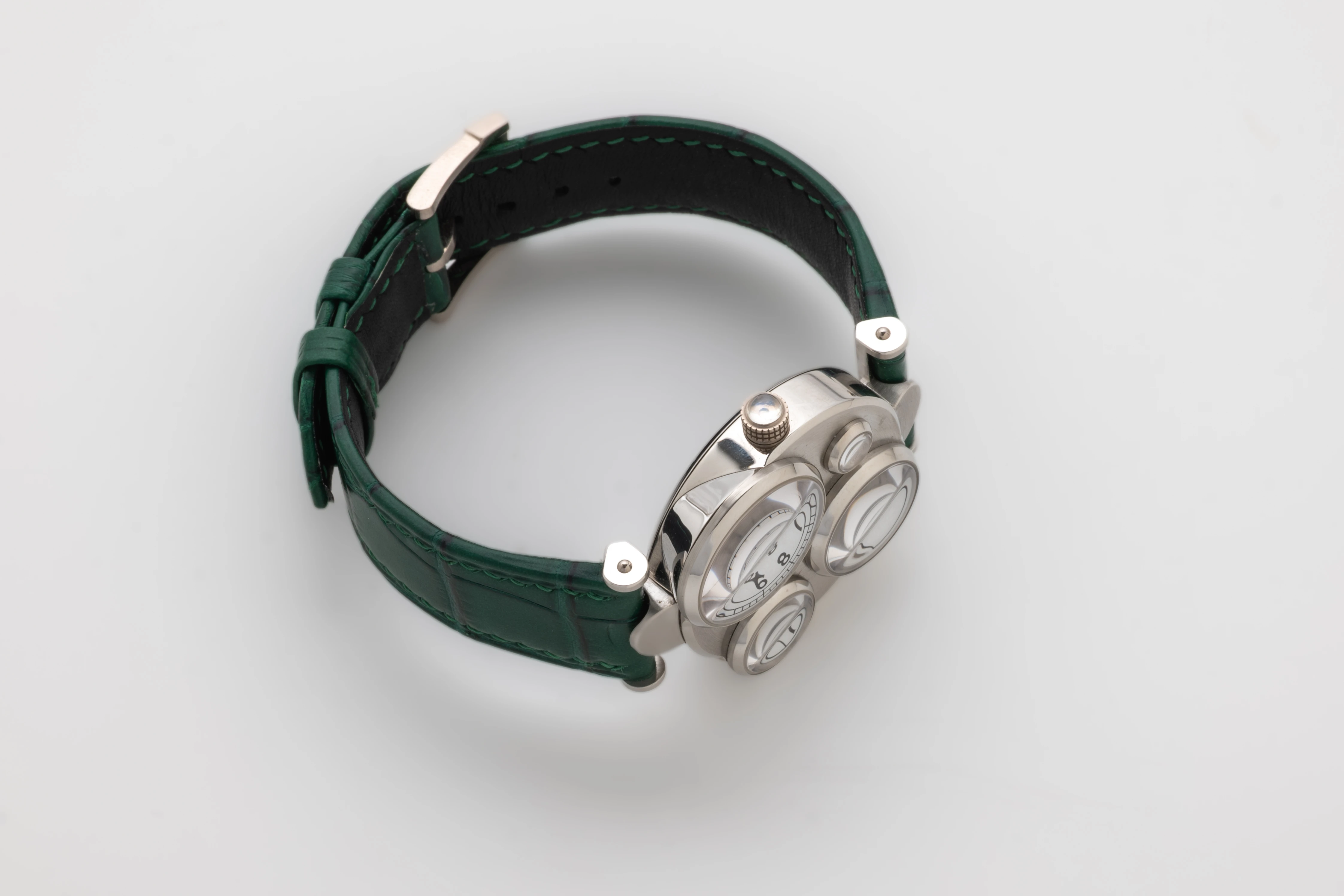
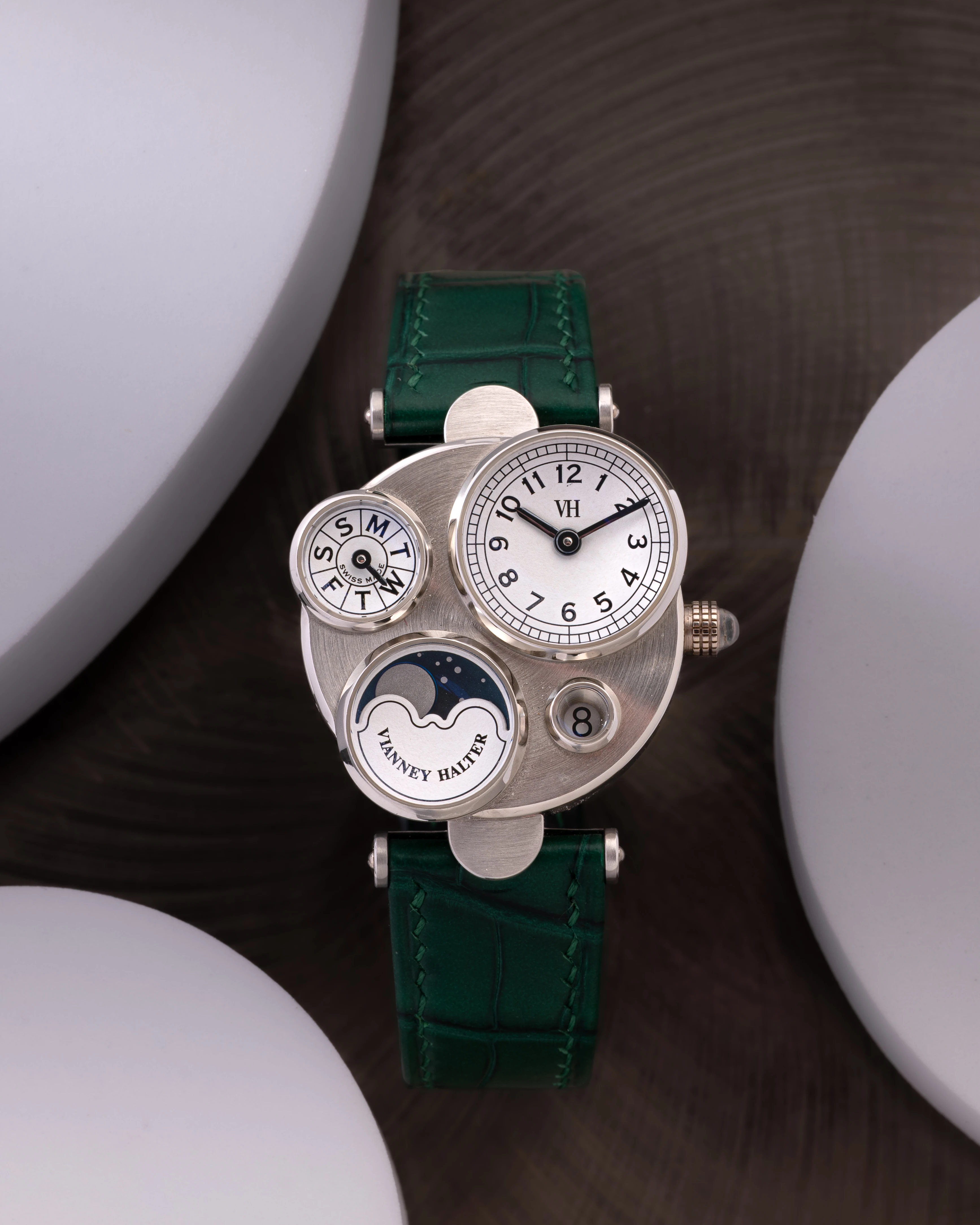
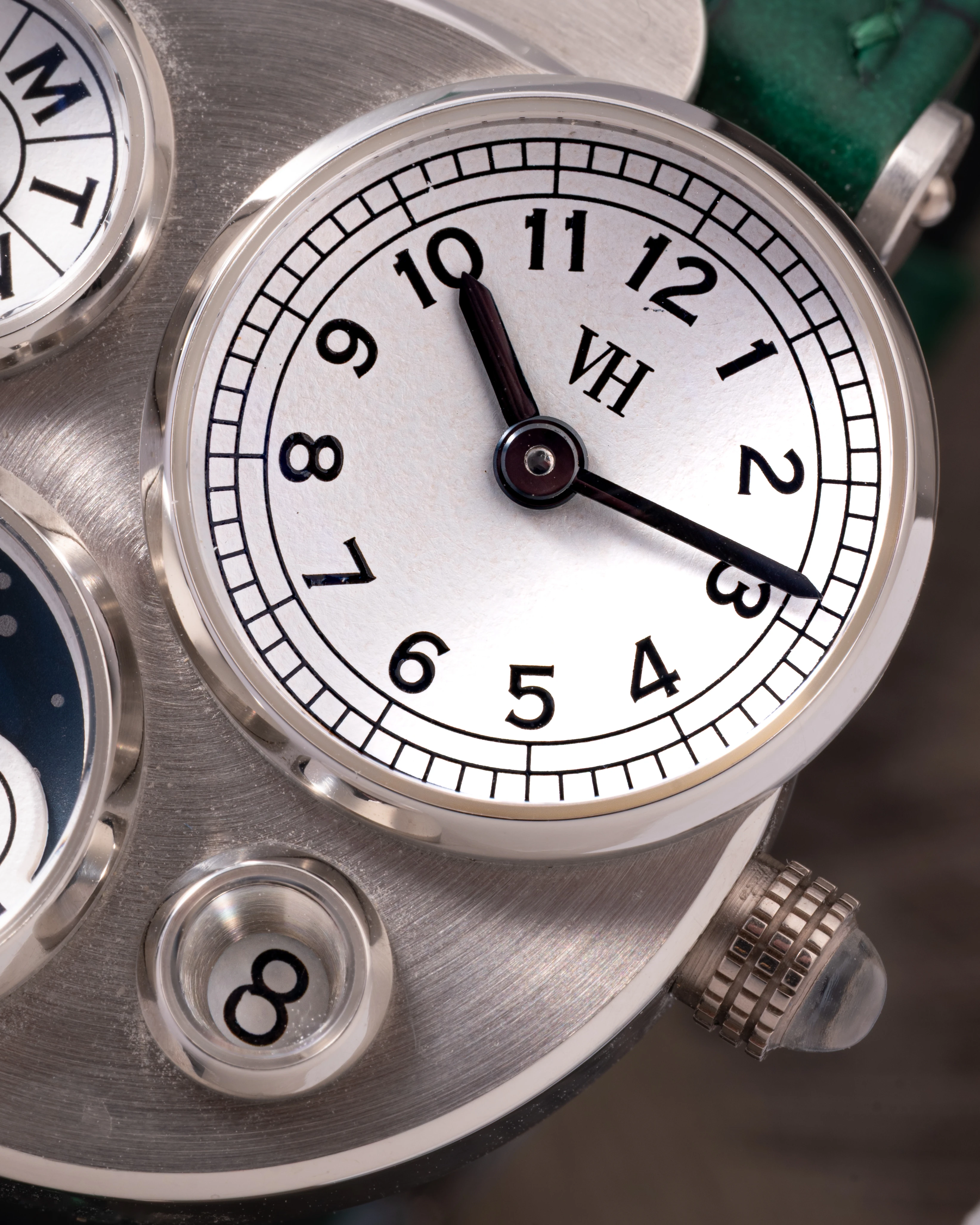
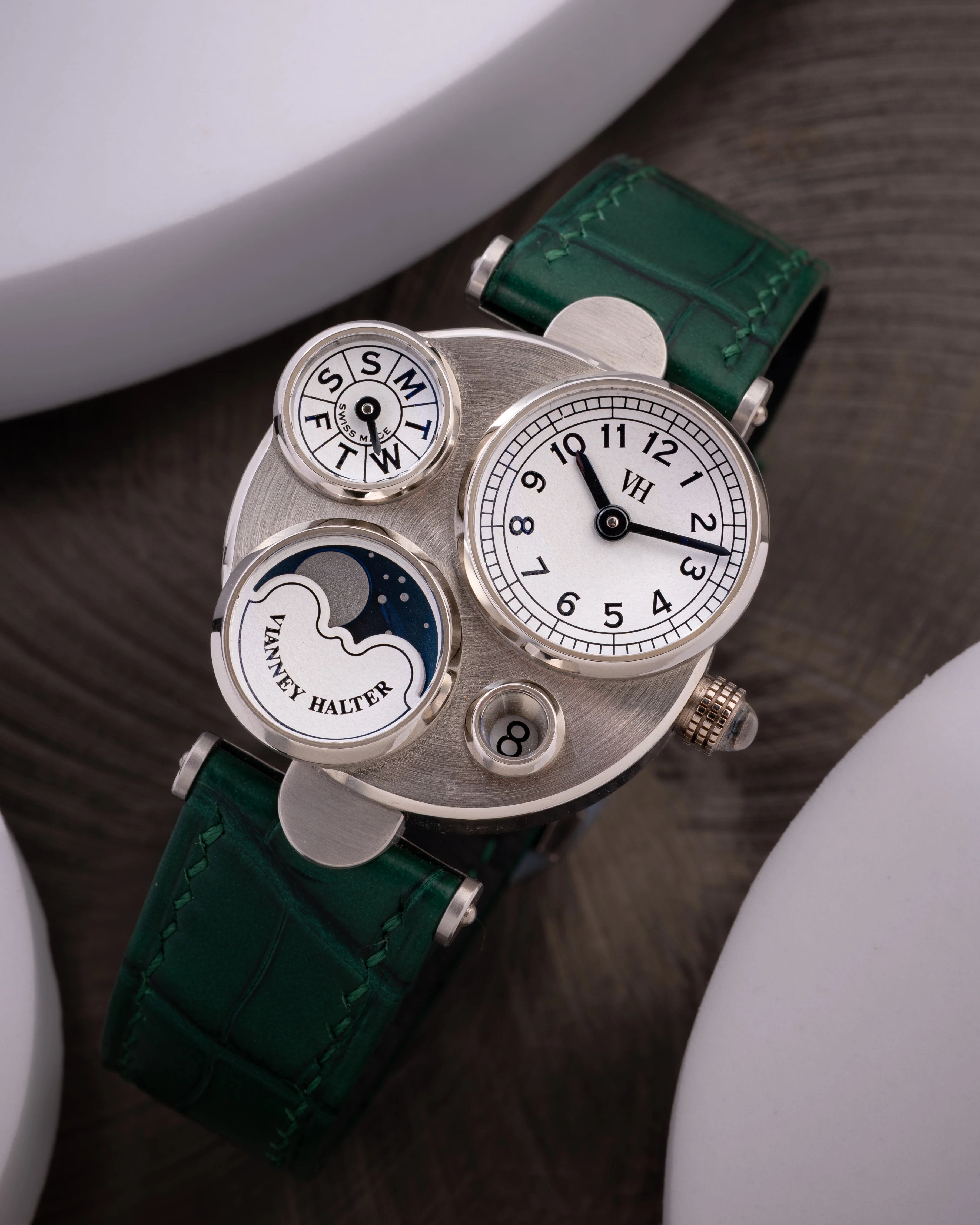
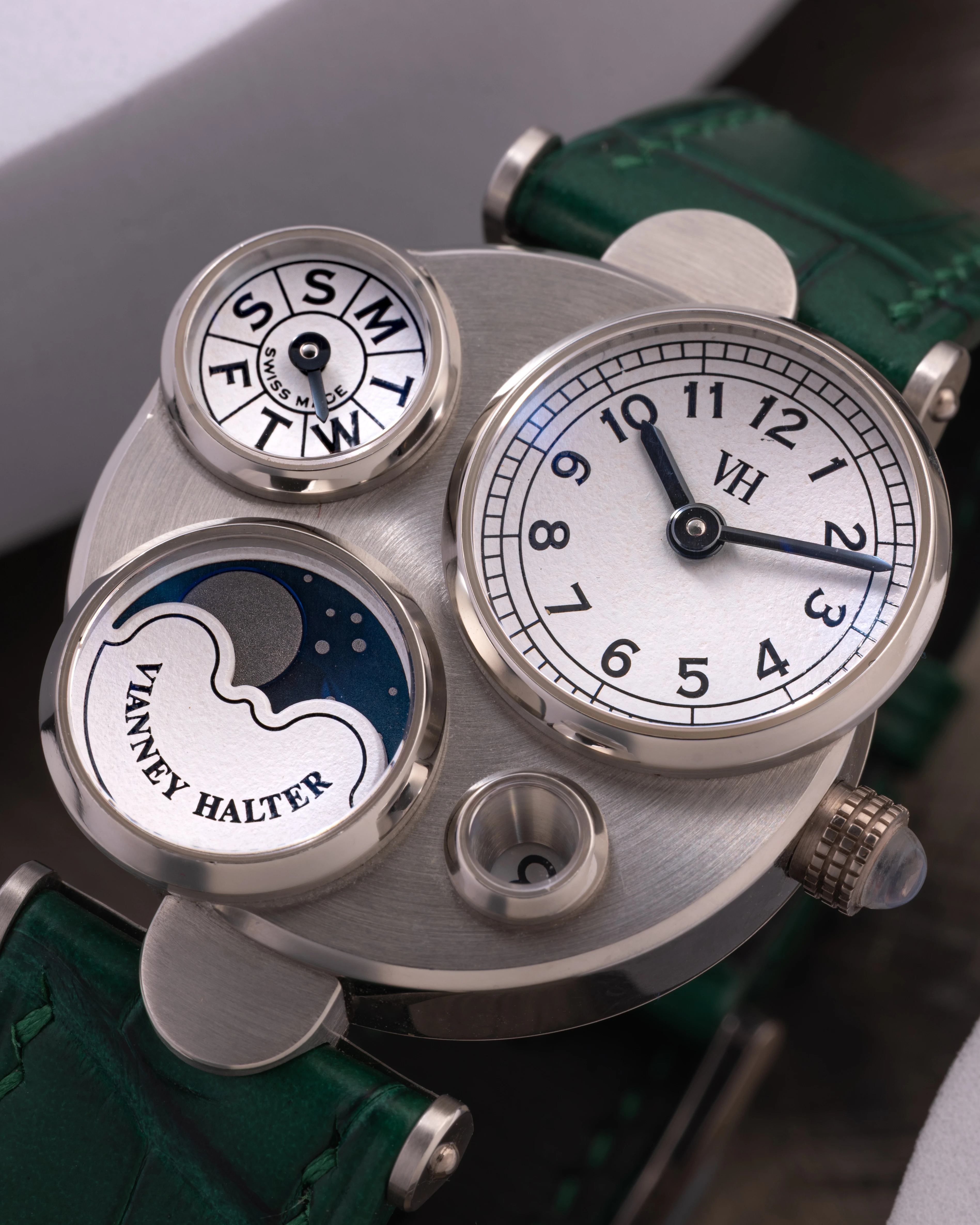
This Contemporaine Moon Phase in platinum features the original Antiqua structure, with a round case from which three separate porthole dials are raised and extend beyond the case outline, along plus the addition of a fourth, smaller porthole-style date dial. Unlike the Antiqua, whose geometric design is dominated by stepped cylindrical shapes, the Contemporaine has a more streamlined form with wide polished bevels, removing the retro feel that defines the Antiqua style and giving it a more wearable character as an everyday urban watch. Notably, after the first Contemporaine, the Contemporaine Perpetual Calendar, Vianney Halter decided to significantly modify the movement in the Contemporaine Moon Phase, simplifying the calendar module. It can be assumed he intended to make the watch slightly more accessible, moving toward a collector’s watch well suited for everyday use.
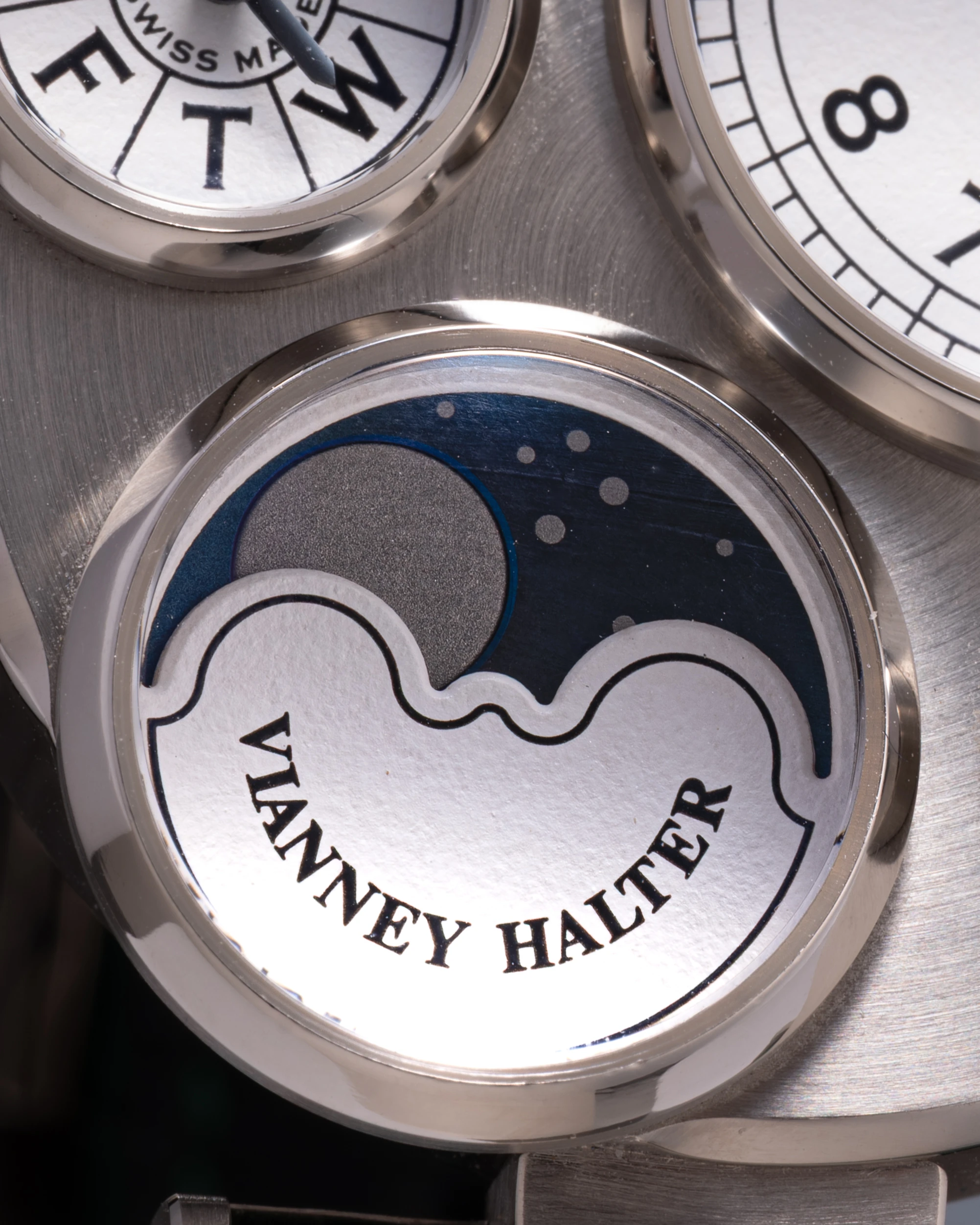
While simplifying the calendar, Vianney Halter retained the geometric design structure with four porthole dials, three of which kept their original functions: the main porthole dial with two hands displaying the time, the upper left dial showing the day of the week, and the small lower right dial indicating the date. The change is in the lower left porthole dial, which now features a moonphase indicator instead of the month and leap year indicators. All porthole dials are capped with convex sapphire crystals, creating a magnifying glass effect. The dial markings are distinctly modern and pragmatic, with baguette hands and printed inscriptions, indexes, and scales.
Notably, Vianney Halter retained the Nouvelle Lémania 8810 automatic caliber as the donor movement for the Contemporaine Moon Phase, replacing the complication module as needed. The movement in this watch, designated VH300, appears nearly identical from the caseback to the VH198 Antiqua and Contemporaine Perpetual Calendar calibers. It features the “mysterious mass” winding rotor, as well as the main bridge and balance bridge, which visually form a single baseplate. The watchmaker cleverly camouflaged this with Côtes de Genève, aligning the border between the stripes precisely along the joining line of these parts. This is why the movement’s visual identity maintains a strong sense of continuity, extending not only to the geometric structure of the watch case design but also to the caliber’s appearance as seen through the sapphire caseback.
Available information indicates that the Contemporaine Moon Phase was offered to be produced in two main versions: platinum (as in this watch) or white gold. There is also a choice of moon disc finish: this watch has a disc with a textured matte finish, while another version features a disc engraved with a schematic representation of the lunar “oceans.” The material of the crown cabochon is also notable: in this watch, it is a generously shaped transparent gemstone, while some examples have a blue stone, presumably sapphire.

ADDITIONAL PHOTOS: