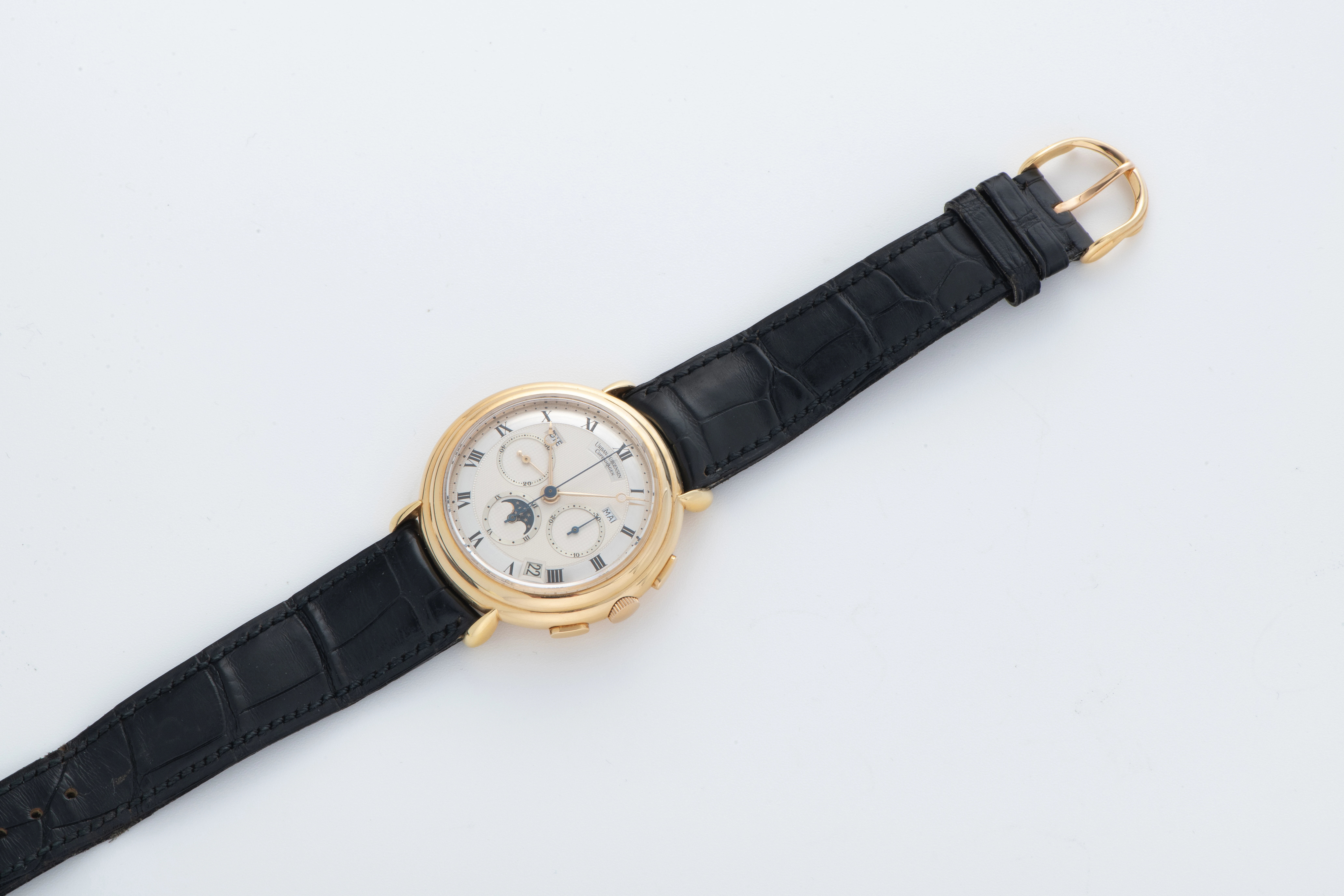
Urban Jurgensen

Don't hesitate to ask for any additional information, Alex is ready to assist and guide you in your decision
DETAILS
The venerable Urban Jürgensen & Sønner brand was founded in 1773 by Urban Jürgensen, a Danish watch and chronometer manufacturer, and celebrated its 250th anniversary in 2023. The brand has earned a reputation for producing outstanding pocket watches. In 1979, it was revived by Peter Baumberger, a passionate watch collector and entrepreneur, in collaboration with the renowned British watchmaker Derek Pratt. The modern Urban Jürgensen collection was never mass-produced and was primarily aimed at select connoisseurs and collectors.
This Reference 1 watch is the earliest wristwatch released by the reborn brand. The Reference 1 edition was produced from 1982 under the direction of Peter Baumberger, with the active involvement of Derek Pratt himself in the manufacture of the watches – a significant part of the appeal of the early collection – even though the brand was not officially founded until 1985. At the heart of this model was the Zenith calibre 3019PHF, better known as El Primero, a calendar version of the calibre 3019PHC, the first automatic chronograph with integrated construction and a high-frequency balance operating at 36,000 vibrations per hour, or 5 Hz. This choice was quite reasonable for the Urban Jürgensen team, as it was the only commercially available high-end self-winding chronograph movement at the time, without plastic parts or other technical compromises, and featuring a traditional column wheel and lateral clutch scheme. Several aspects are noteworthy regarding the use of this movement in the Urban Jürgensen Reference 1.
Firstly, Urban Jürgensen, and most likely the technical driver of the project, Derek Pratt, were among the first in the industry to draw attention to this movement, which was produced from 1971 to 1975 and used exclusively by the Zenith factory in Espada models, with a total production run of 800 pieces during those years. Apparently, Urban Jürgensen acquired unused stocks of the calibre 3019PHF, as El Primero production did not resume until 1985, when Ebel and Rolex showed interest in the movement. Phillips reports that only 186 Reference 1s were produced between 1982 and 1986. In 2001, 15 pieces of the final version in platinum were produced.
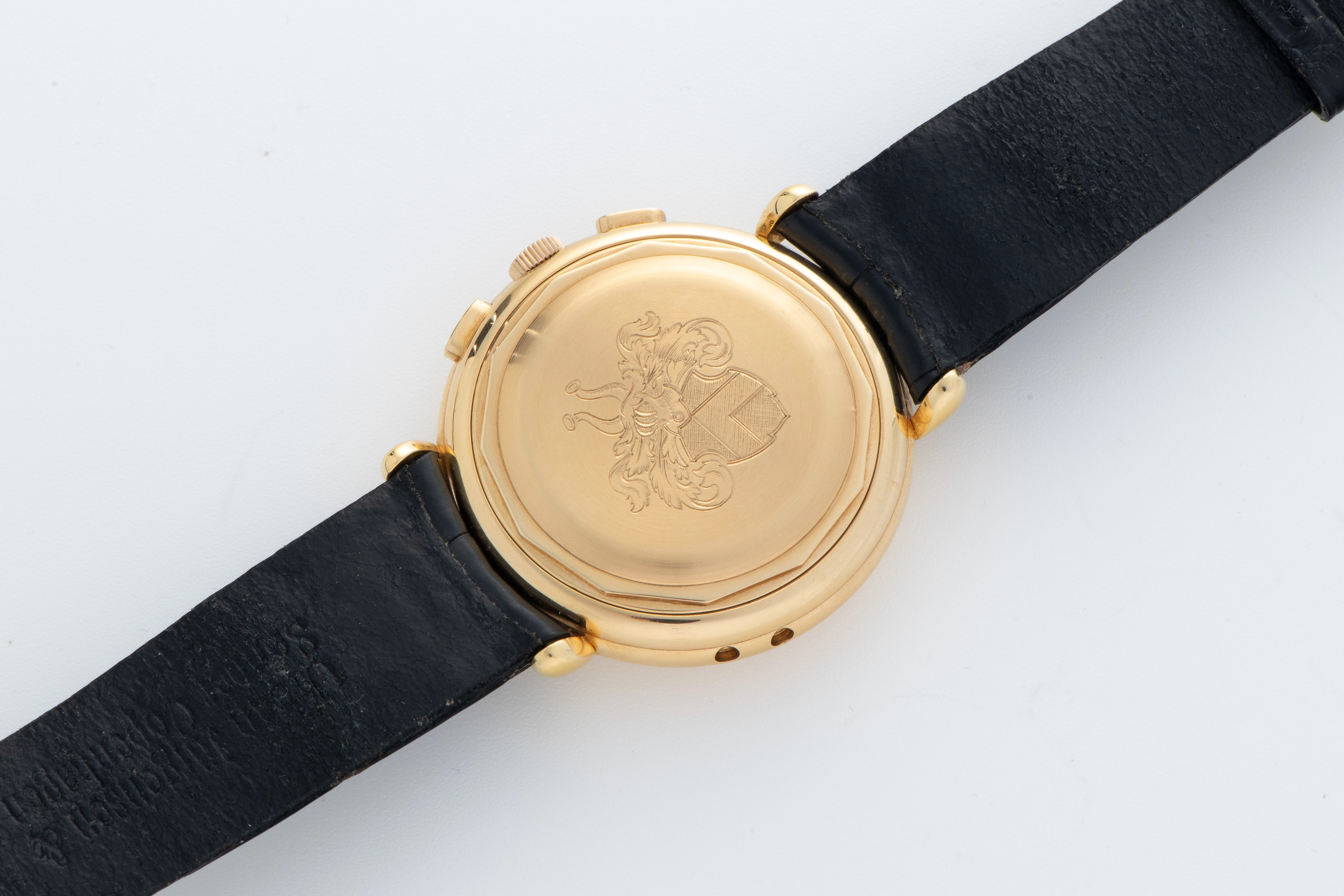
The second notable aspect is that Urban Jürgensen fitted the Reference 1 with a closed caseback, preventing the owner from viewing the movement – this was standard practice for Urban Jürgensen at the time. However, Urban Jürgensen deemed it necessary to make the rotor much more openworked than Zenith originally did, to render the beautiful chronograph movement more open, even though it is not visible beneath the closed caseback. There is a slightly more mundane version in which the corresponding part of the rotor has simply been milled to remove the engraved Zenith lettering.
REASONS TO BUY
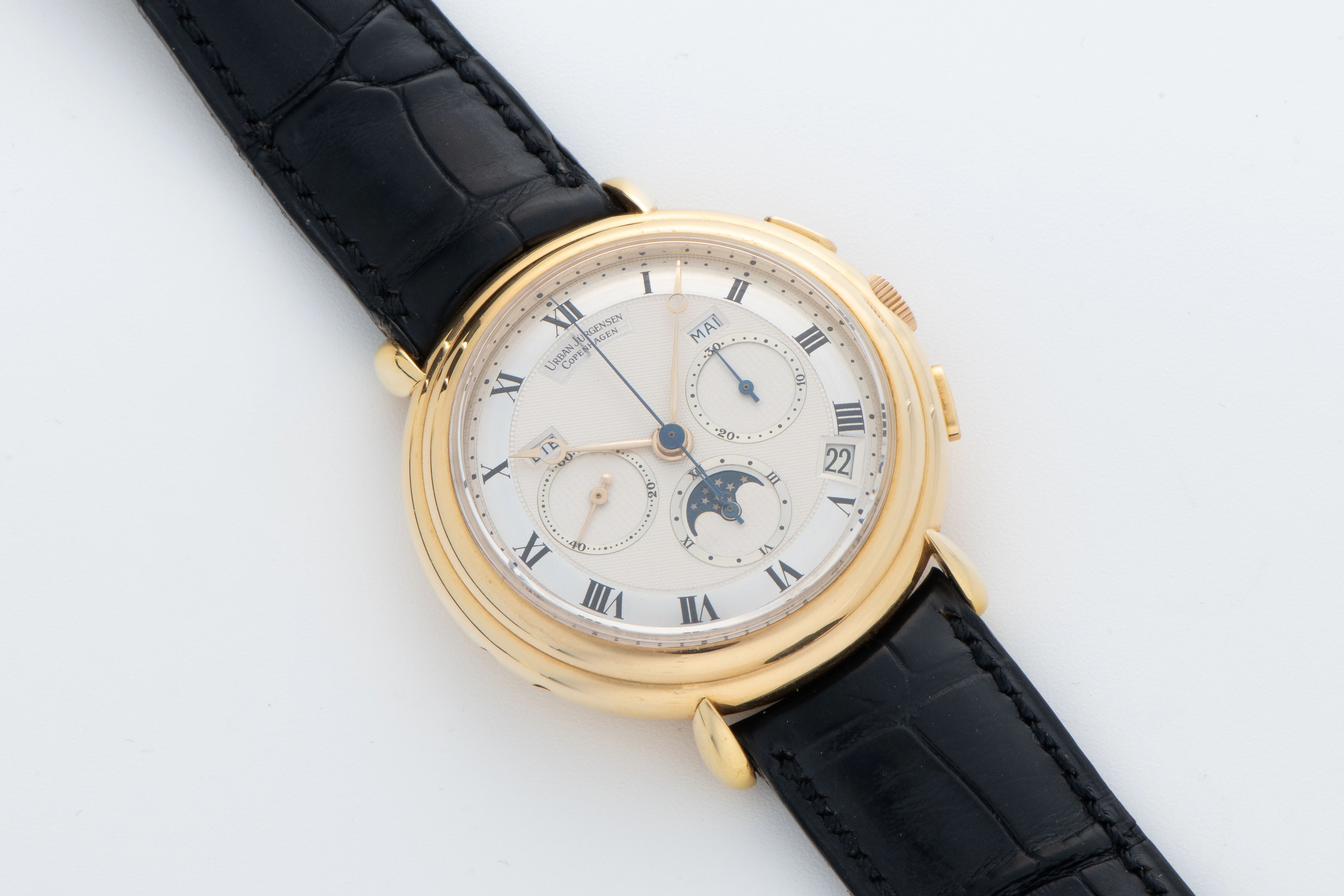
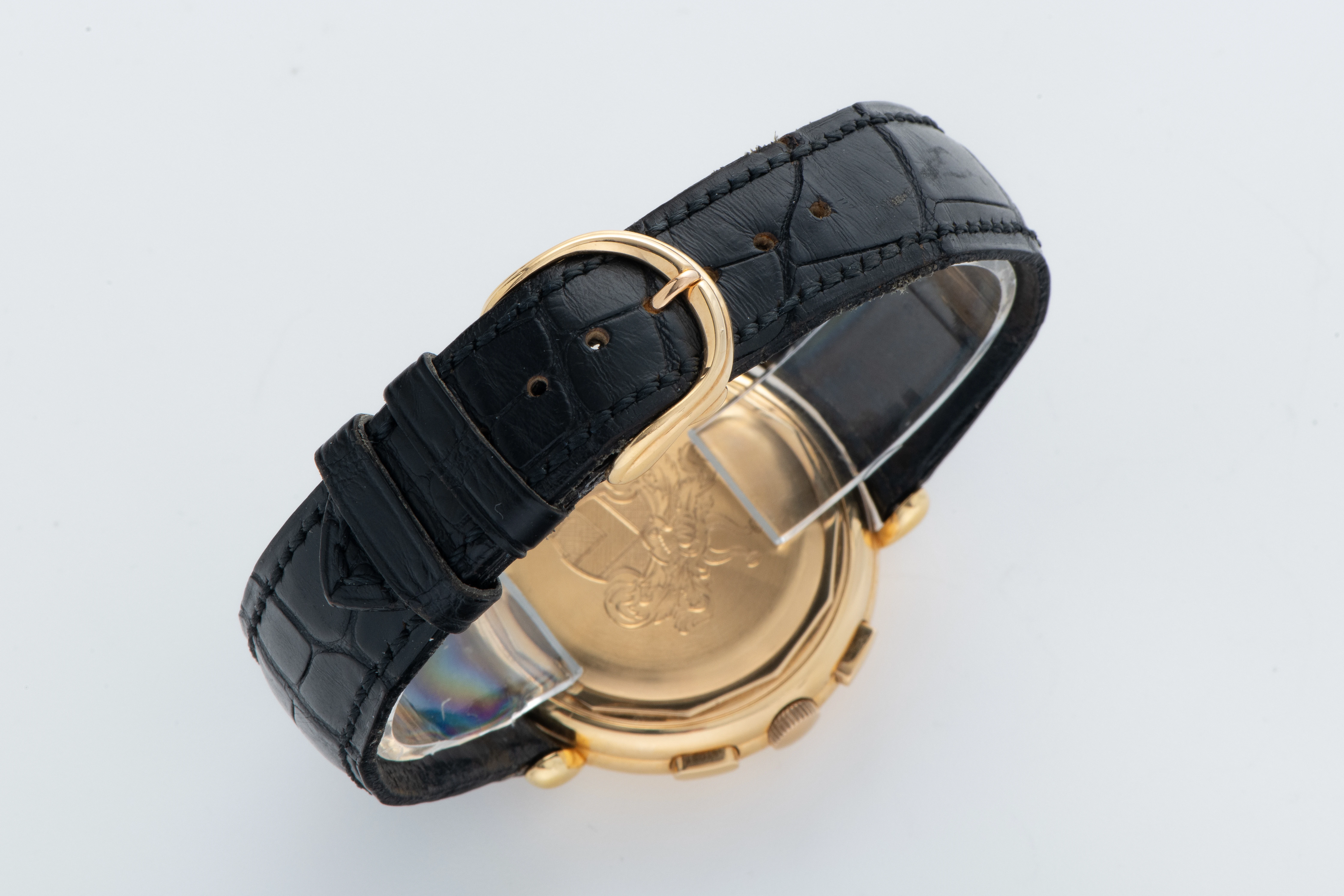
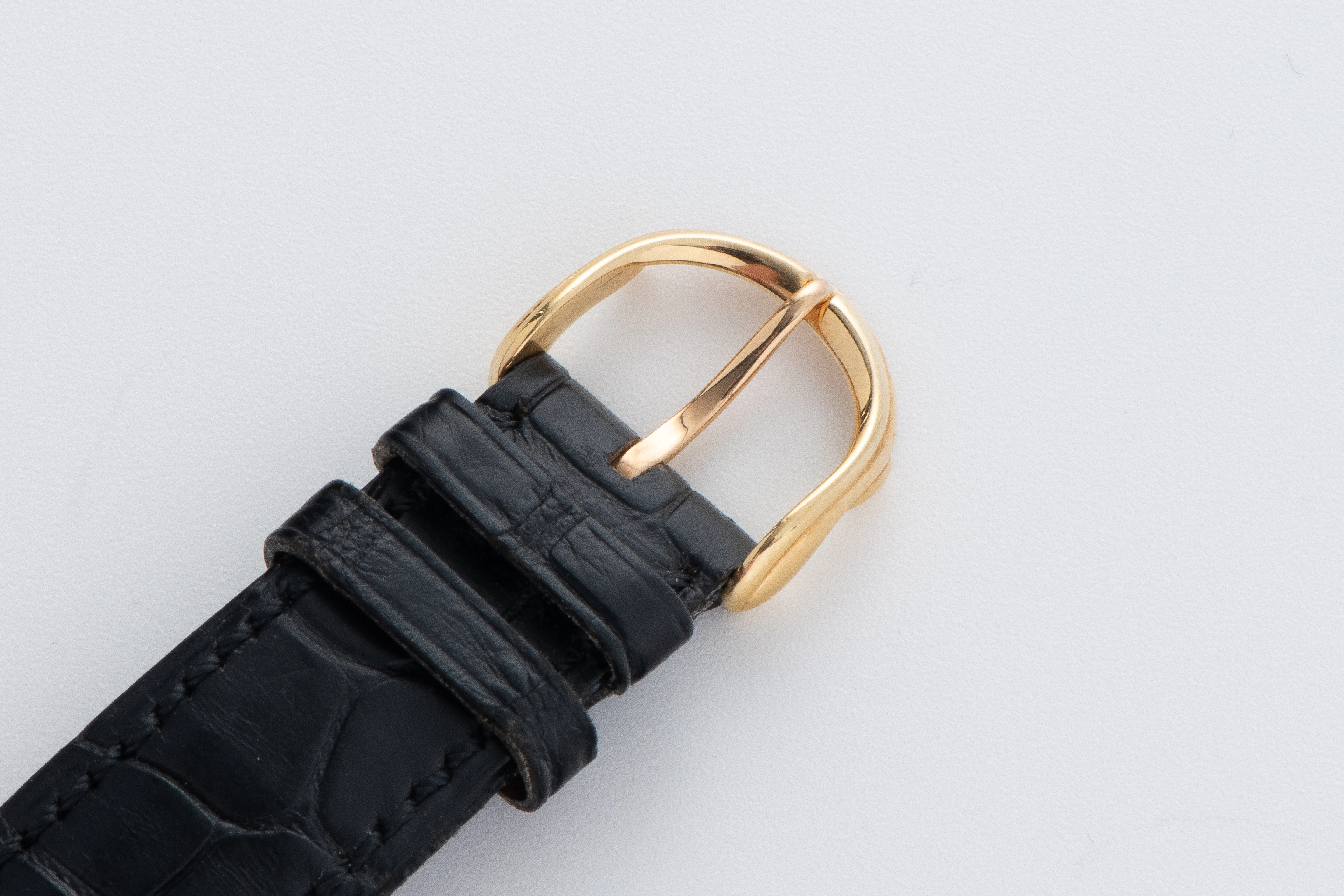
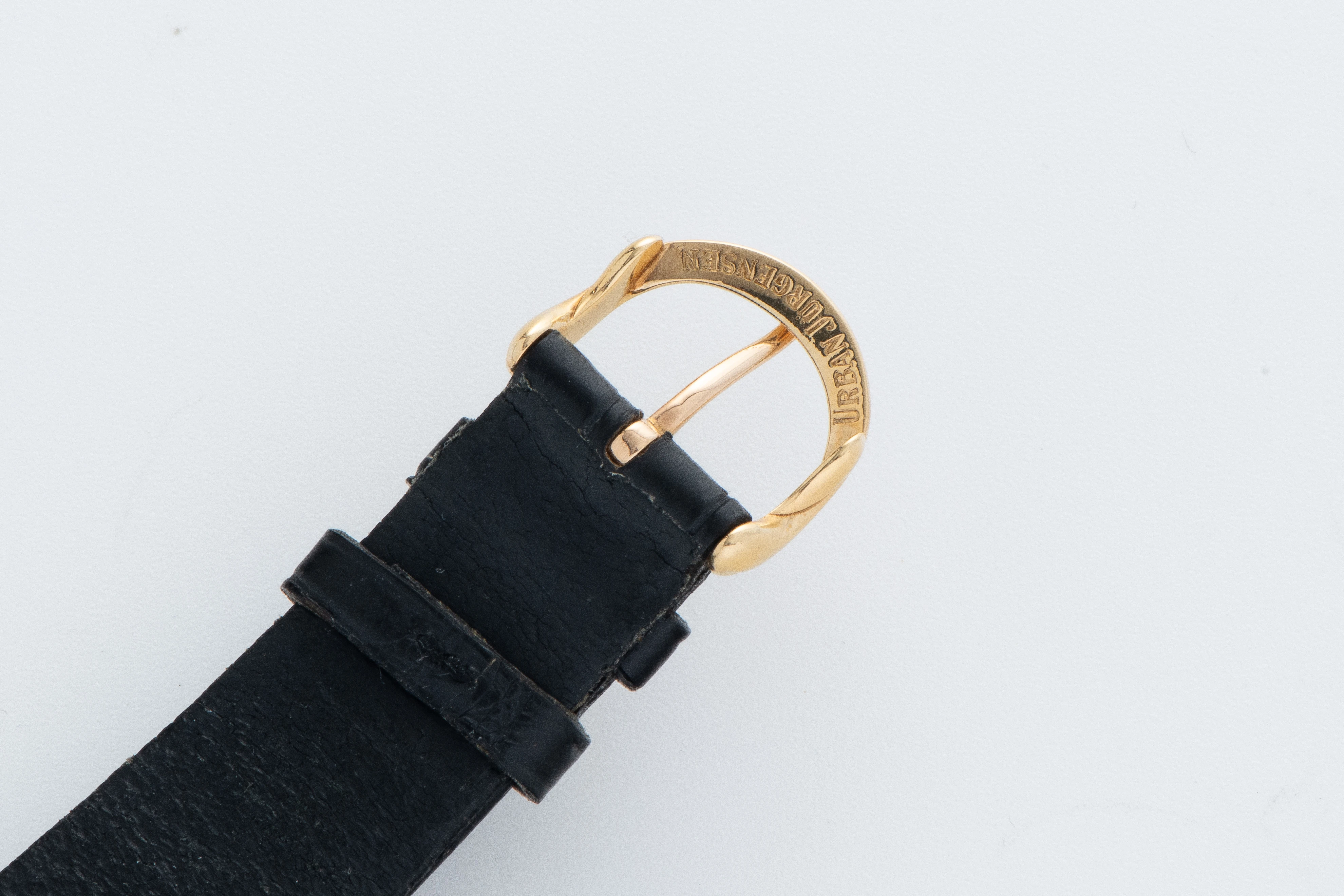
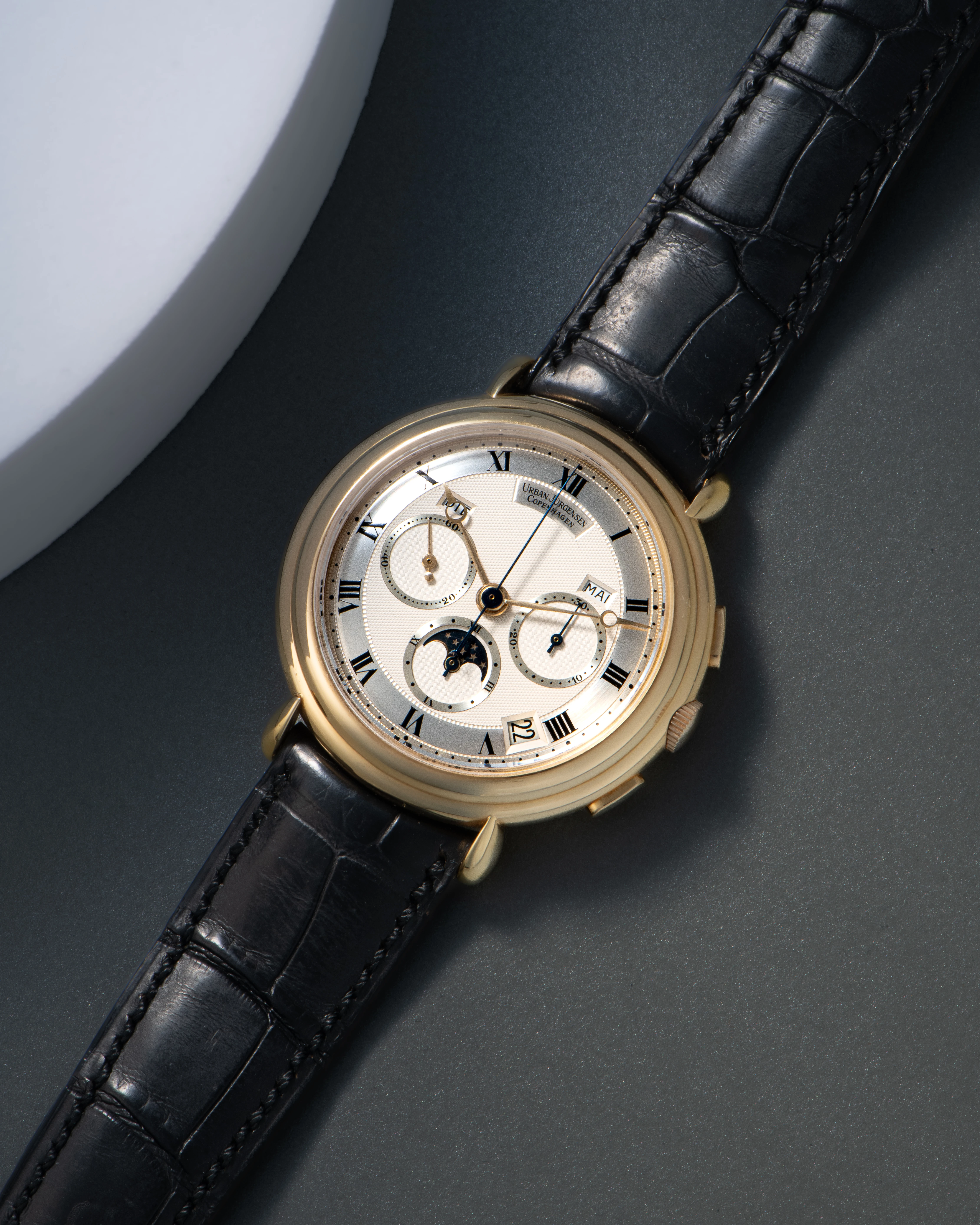
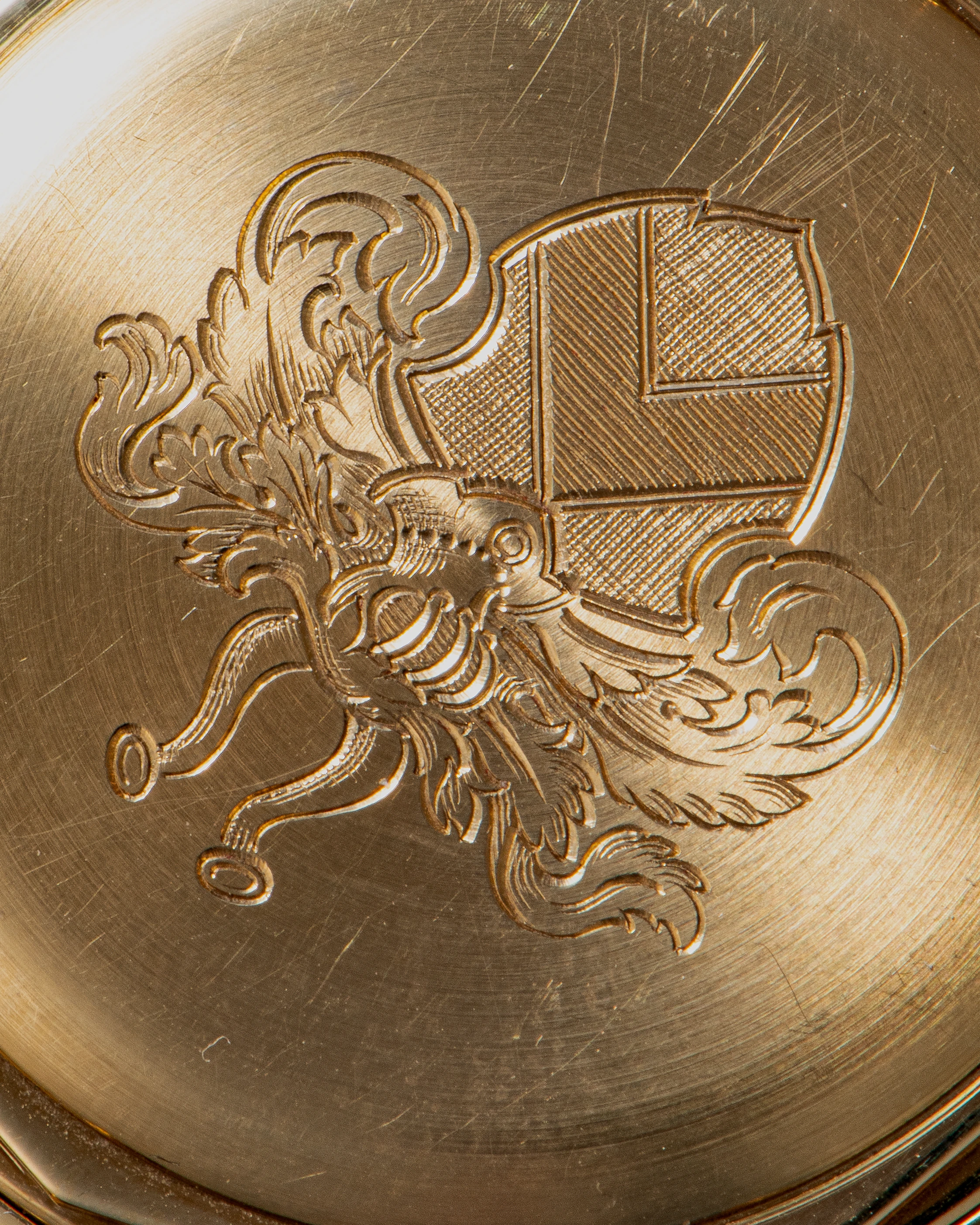
In our view, the Urban Jürgensen Reference 1 in yellow gold deserves special attention as a rare model from the early days of the Urban Jürgensen brand in its modern incarnation. The Reference 1 serves as a link between the traditional era of wristwatch development, which concluded with the advent of quartz technology, and the modern era, characterised by an abundance of exquisite and complex mechanical models. In this context, the immediate merits of the Reference 1 — including its traditional design, superb gold case quality, magnificent guilloché dial, early self-winding chronograph movement with triple calendar and moon phase, and even the pin buckle of the strap perfectly matching the style of the case’s lugs – are enhanced by the historical significance of this release, now regarded as one of the key harbingers of the renaissance of mechanical watches in the 1980s. It is also worth noting that the 39 mm case remains very much in line with modern tastes, and the notable caseback is hand-engraved with an old-style noble family coat of arms, imparting a special character and uniqueness to this watch.
The caseback warrants special attention, featuring meticulous hand-engraving that depicts the family coat of arms in an antique style. This is presumably the original version of the coat of arms of the ancient noble families von Metzsch, originally from Saxon-Meissen-Vogtland, and von Pölnitz, originally from Saxon-Vogtland. These families have been mentioned since the 13th century and share a common origin and, therefore, common heraldic symbols. The coat of arms is described as a silver shield with an azure chevron, a helmet, and an azure and silver mantle, surmounted by azure and silver buffalo horns.
ABOUT THIS WATCH
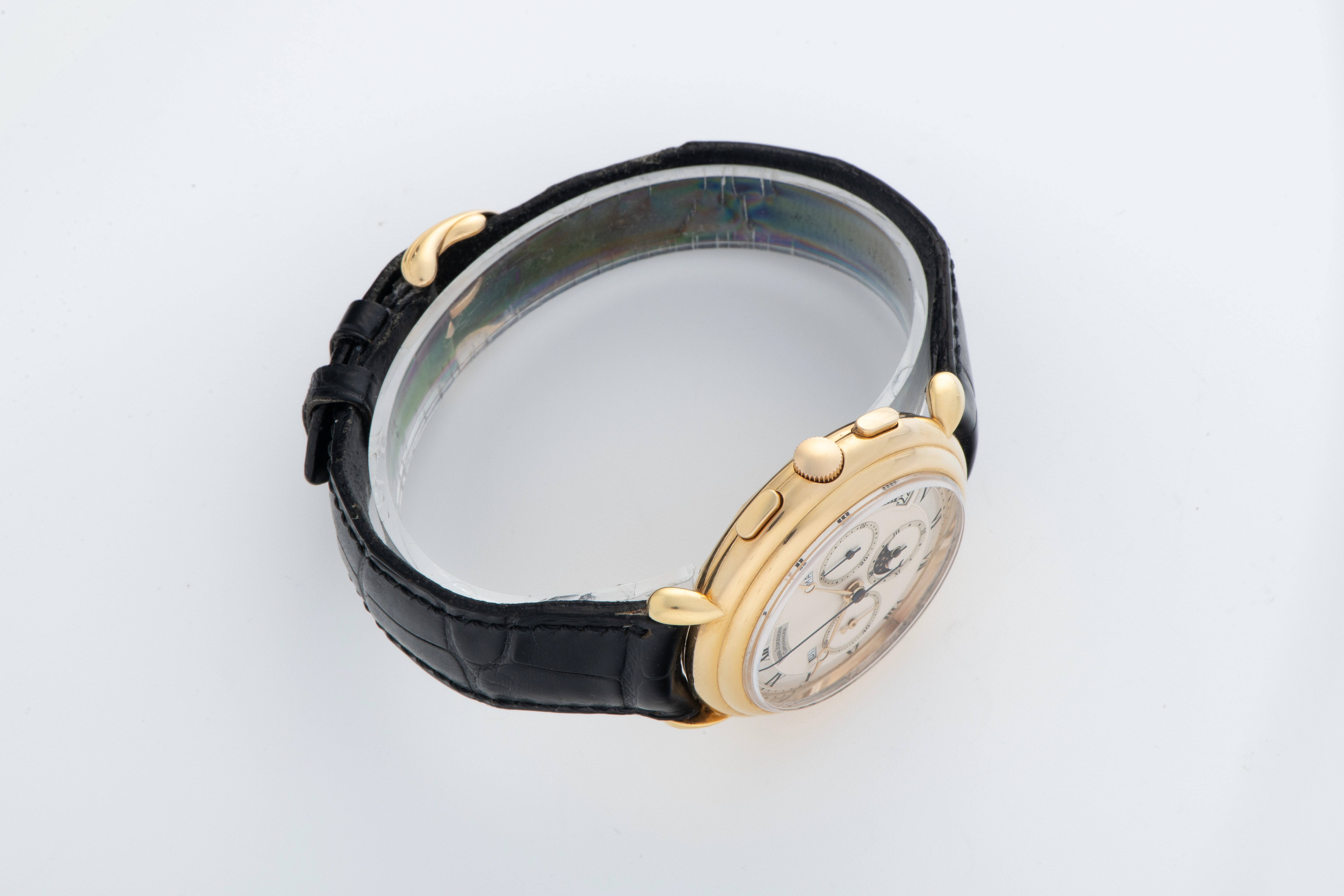
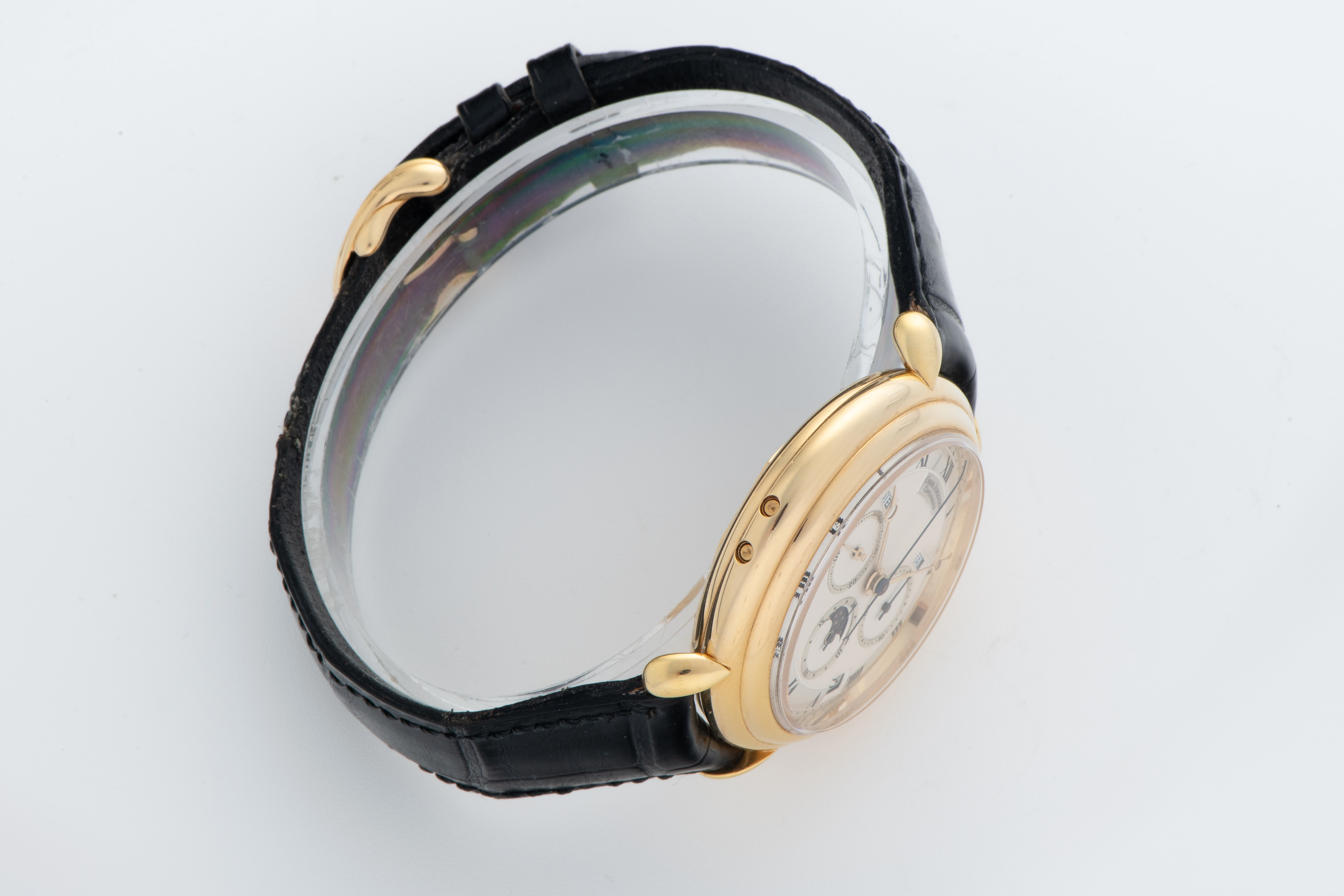
The watch case is traditionally handcrafted, with the case ring and the drop-shaped lugs, typical of Urban Jürgensen, produced separately and then soldered. Connoisseurs will notice the impeccable craftsmanship, as the solder line is barely visible upon inspection. All parts of the case are carefully polished. The ‘double pomme’ profile of the polished bezel deserves special attention and gives the watch an unmistakable classic character. The same bezel design proved extremely successful in the creation of classic Blancpain wristwatches after the relaunch of the brand collection in 1983 by Jean-Claude Biver.
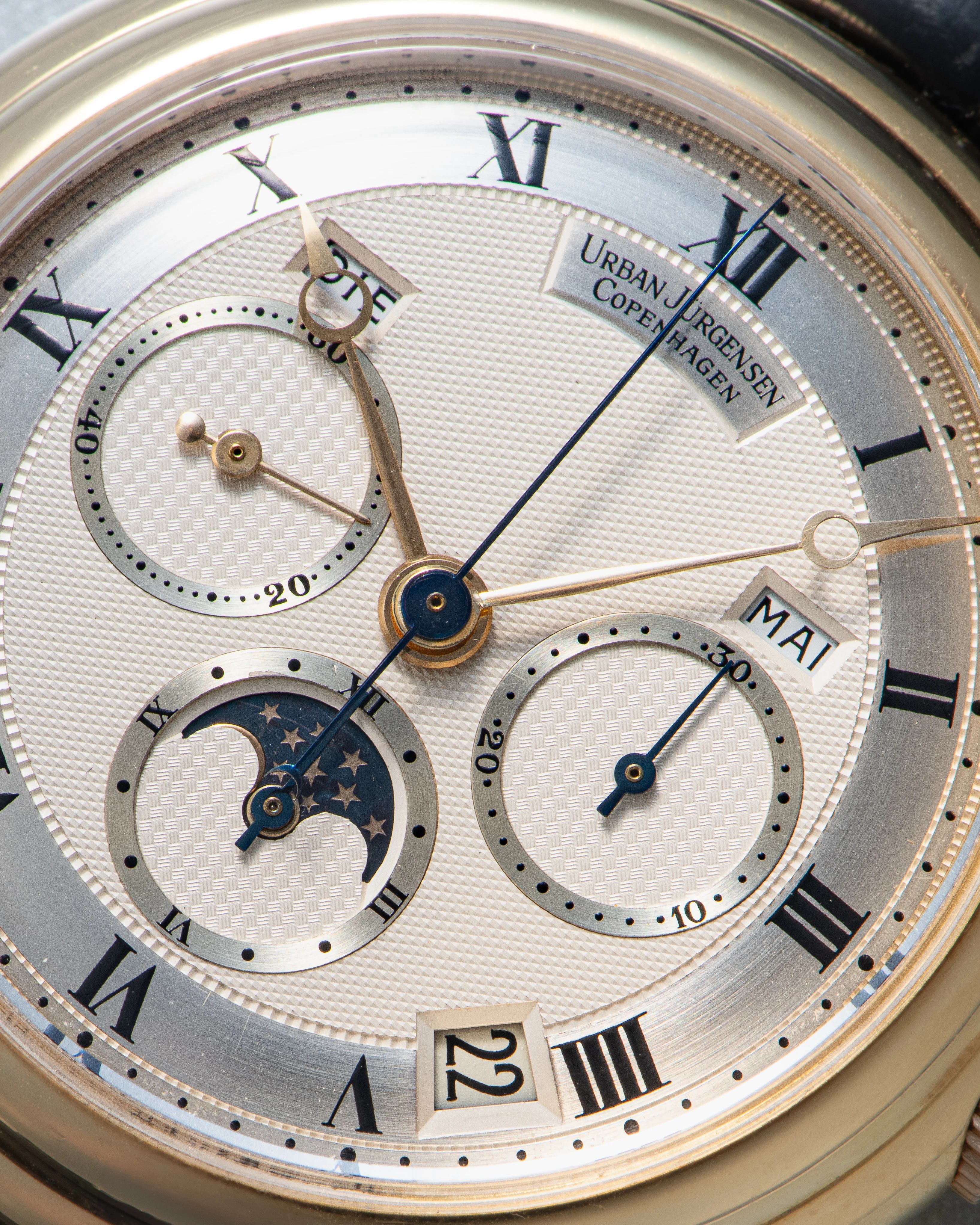
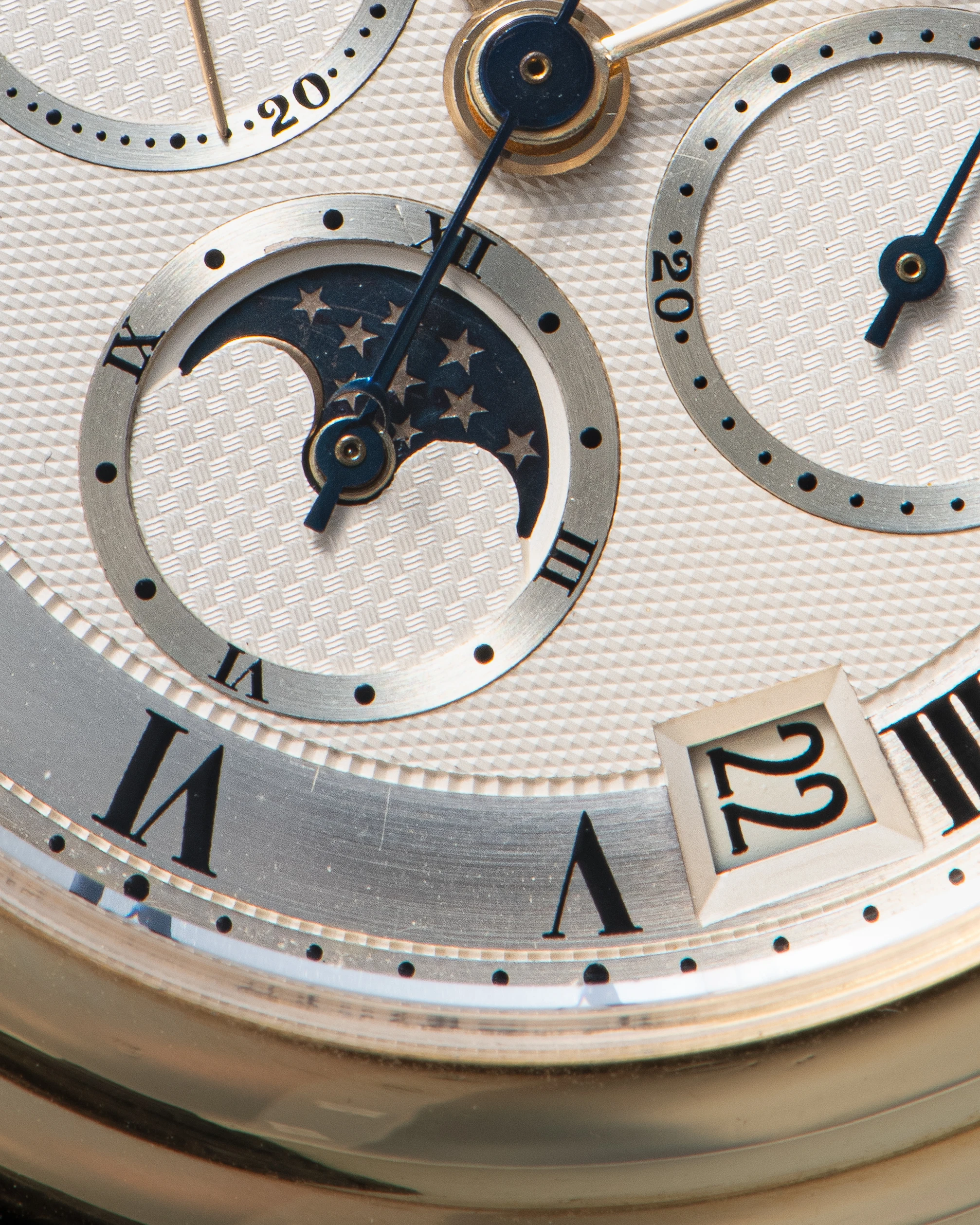
The dial is also an outstanding example of traditional craftsmanship, an aspect of Reference 1 that the brand, like all other early Urban Jürgensen releases, owes to its master watchmaker Derek Pratt, a protagonist of old traditional decorative techniques. Many early Urban Jürgensen watches, and most likely this example as well, were made by Derek Pratt himself, including the guilloché work which can be appreciated when viewing the dial. The guilloché on the Reference 1 dial features three different styles: a ‘lozenge’ guilloché in the centre, a ‘vieux panier’ (basket weave) guilloché for the sub-dials of small seconds, the 30-minute and 12-hour counters – the latter combined with moonphase – and a filet sauté guilloché on the outlines. All the decorations on the dial were made by hand on a rose machine, most likely by Derek Pratt himself, who was renowned as a master of this finishing technique.
The chapter ring, featuring black printed Roman numerals, is finely brushed in a circular pattern, and the date window has a trapezoidal shape – both examples of Mr Pratt’s meticulous attention to detail. The ‘Pomme de Breguet’ hour and minute hands, as well as the small seconds hand, are made of gold, while all the chronograph hands are crafted from blued steel – further evidence of respect for tradition, ergonomic principles, and good taste. The recessed crown and chronograph pushers, which also have a rounded baguette shape, exemplify the ergonomic design approach.

Specifications
| Ref | Reference 1 | |
| D= | 40mm | |
| Glass | Sapphire glass | |
| Dial | Silvered dial, hand engine-turned guilloche motif, signed Urban Jürgensen Copenhagen, blued steel Breguet hour and minute hands, blued steel counter hands, circularly brushed chapter ring and outlines of counters, black Roman numerals, small seconds at 9 o’clock, 30-minute counter at 3 o’clock, 12-hour counter and moonphase at 6 o’clock, date aperture between 4 and 5 o’clock, month aperture at 2 o’clock, day of the week aperture at 10 o’clock | |
| Case material | Silvered dial, hand engine-turned guilloche motif, signed Urban Jürgensen Copenhagen, blued steel Breguet hour and minute hands, blued steel counter hands, circularly brushed chapter ring and outlines of counters, black Roman numerals, small seconds at 9 o’clock, 30-minute counter at 3 o’clock, 12-hour counter and moonphase at 6 o’clock, date aperture between 4 and 5 o’clock, month aperture at 2 o’clock, day of the week aperture at 10 o’clock | |
| Movement | Silvered dial, hand engine-turned guilloche motif, signed Urban Jürgensen Copenhagen, blued steel Breguet hour and minute hands, blued steel counter hands, circularly brushed chapter ring and outlines of counters, black Roman numerals, small seconds at 9 o’clock, 30-minute counter at 3 o’clock, 12-hour counter and moonphase at 6 o’clock, date aperture between 4 and 5 o’clock, month aperture at 2 o’clock, day of the week aperture at 10 o’clock |
Condition report
| Box: | Yes |
| Papers: | Yes |
ADDITIONAL PHOTOS: