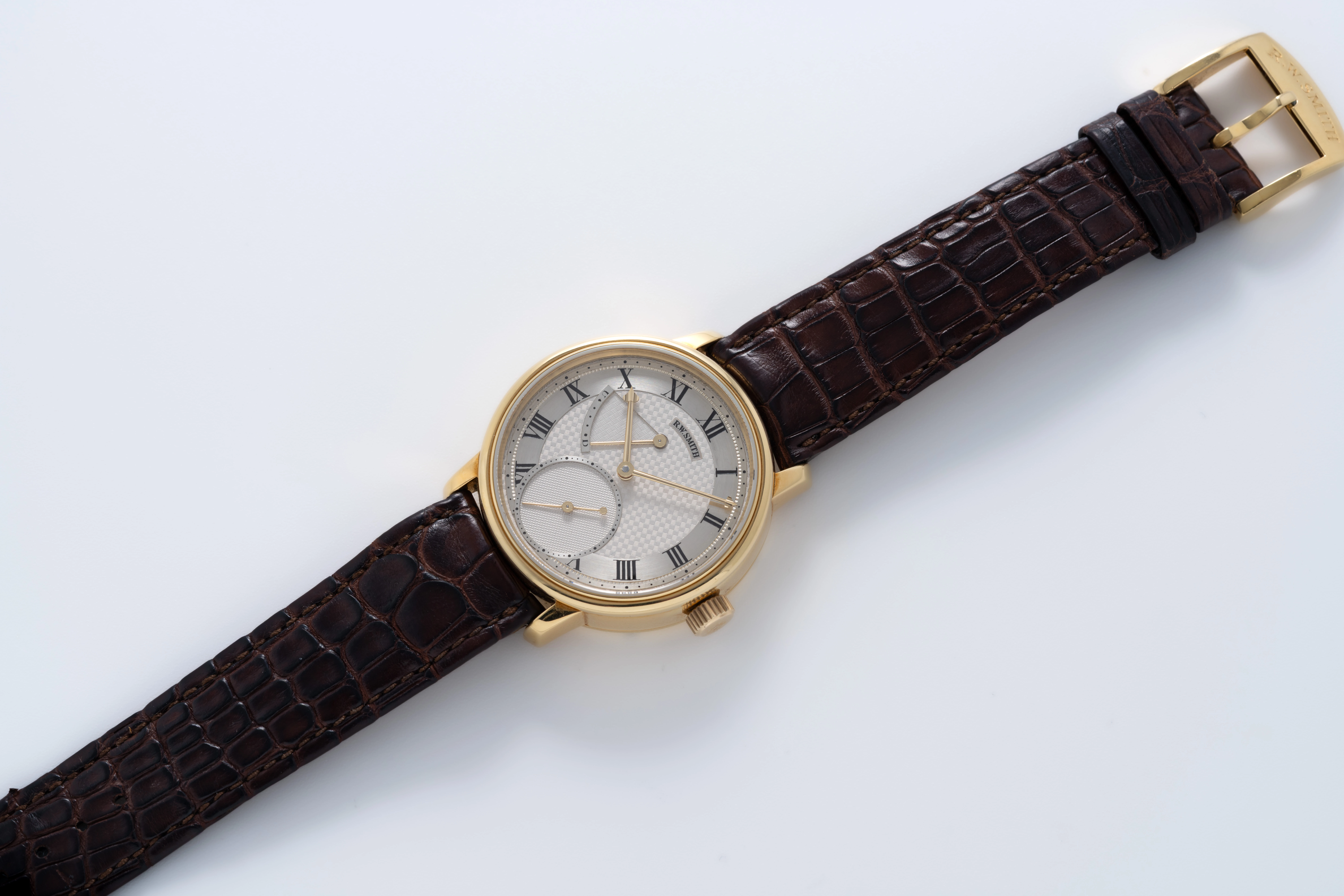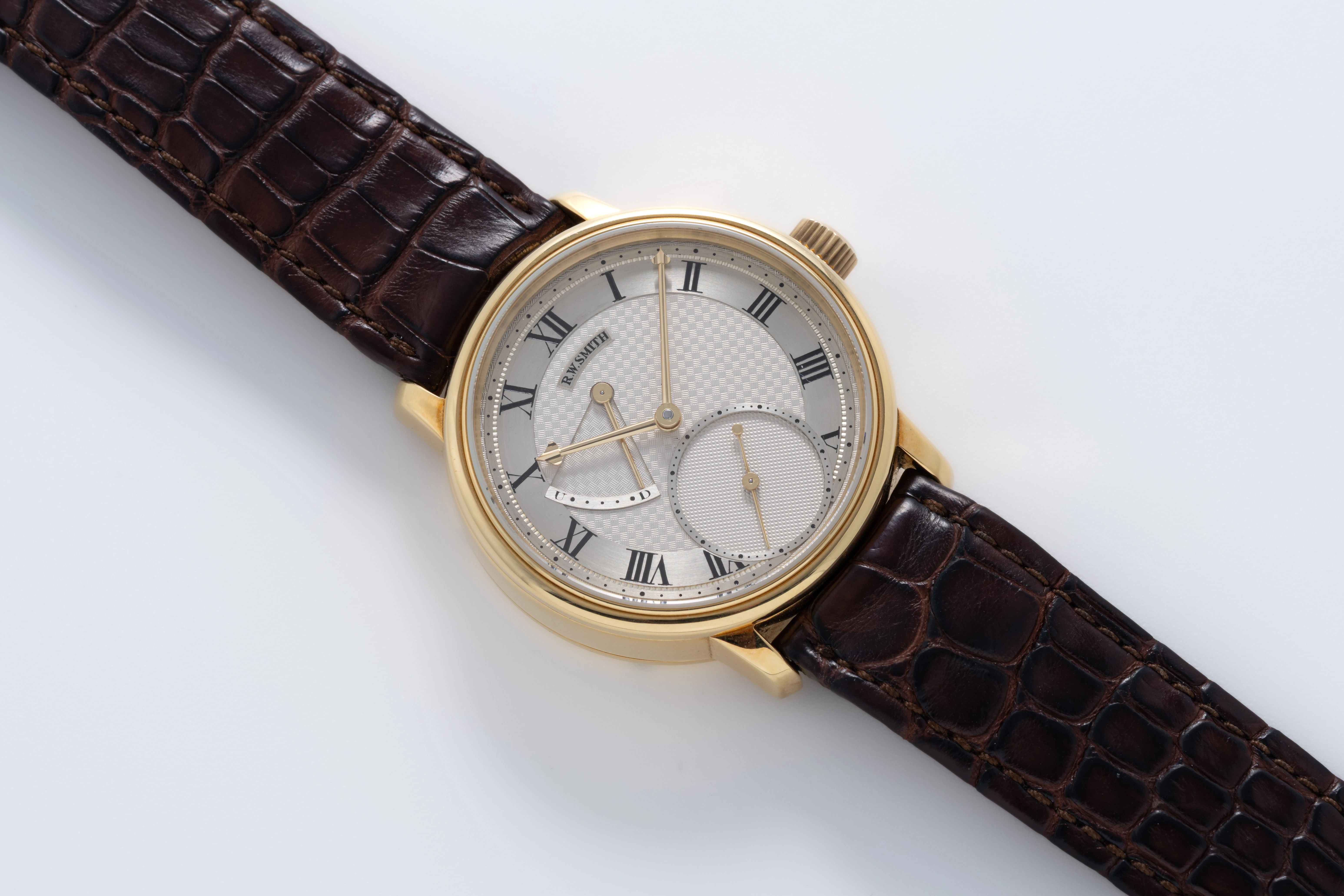
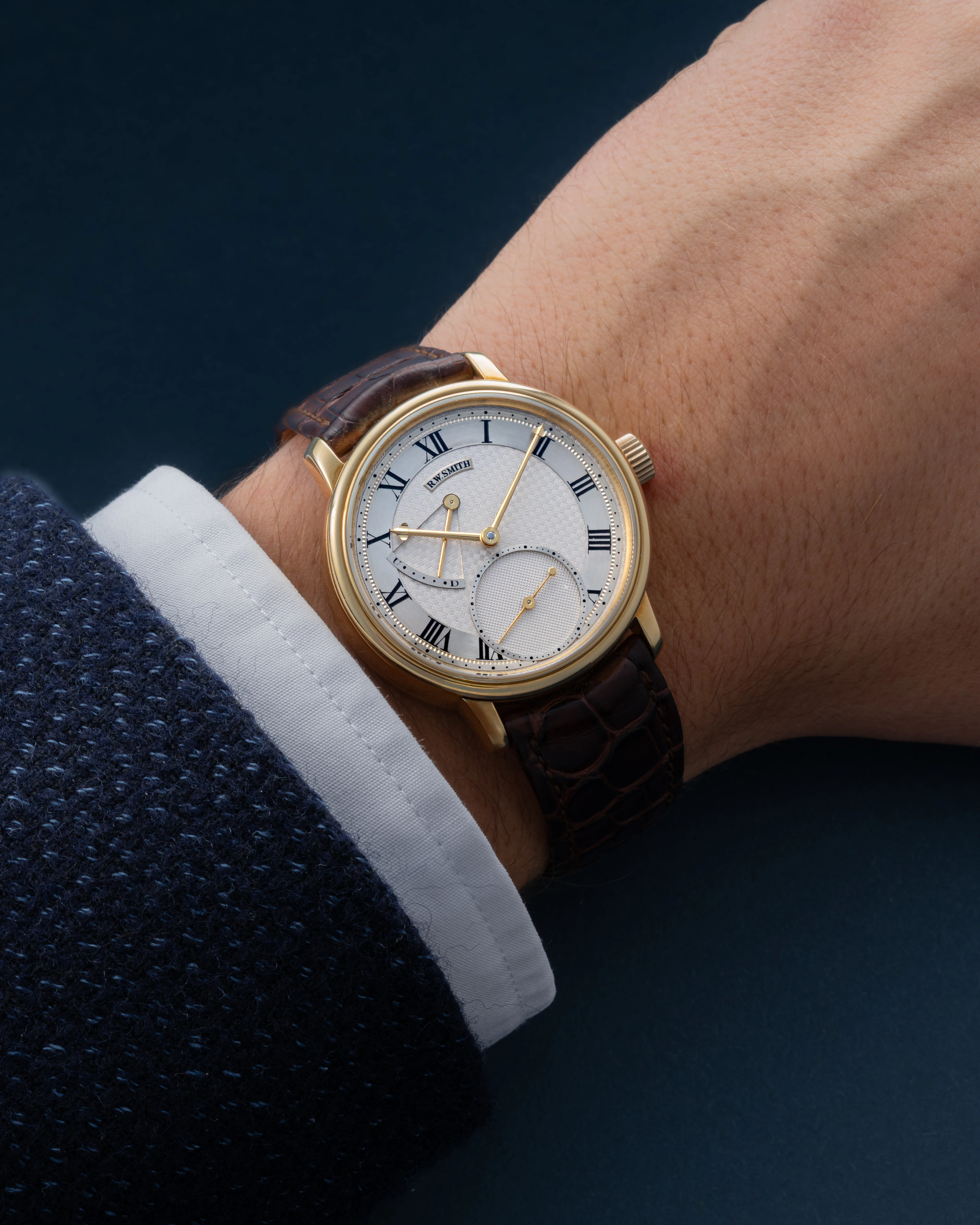
Roger W. Smith

Don't hesitate to ask for any additional information, Alex is ready to assist and guide you in your decision
DETAILS
Roger W. Smith, who preserves and continues George Daniels’s knowledge and legacy throughout his career, produces his distinctive English timepieces on the Isle of Man. The Series 2, his first series-produced model, is a hand-wound wristwatch with a power reserve indicator, whose design and construction are strongly reminiscent of vintage English pocket watches. Overall, Mr Smith’s timepieces are a striking blend of traditional handcraftsmanship and the use of one of the most advanced modern escapements: the co-axial escapement, originally developed by Mr Daniels in 1975.
After founding his own brand in 2001, following more than a decade working with Daniels, Mr Smith focused on the rectangular Series 1 watches for several years. The Series 2 watch was launched in 2006 and unlike Series 1, which used parts from a Swiss ebauche, became the brand’s first watch entirely crafted in Mr Smith’s own workshop, with all manufacturing done in-house (as always stipulated, except for some components requiring specialised technologies, such as jewels, crystals etc.). It is worth noting that Mr Smith prefers the designation “Series Two”, but the market generally refers to the watches as “Series 2”, as engraved, for example, on the caseback of this watch.
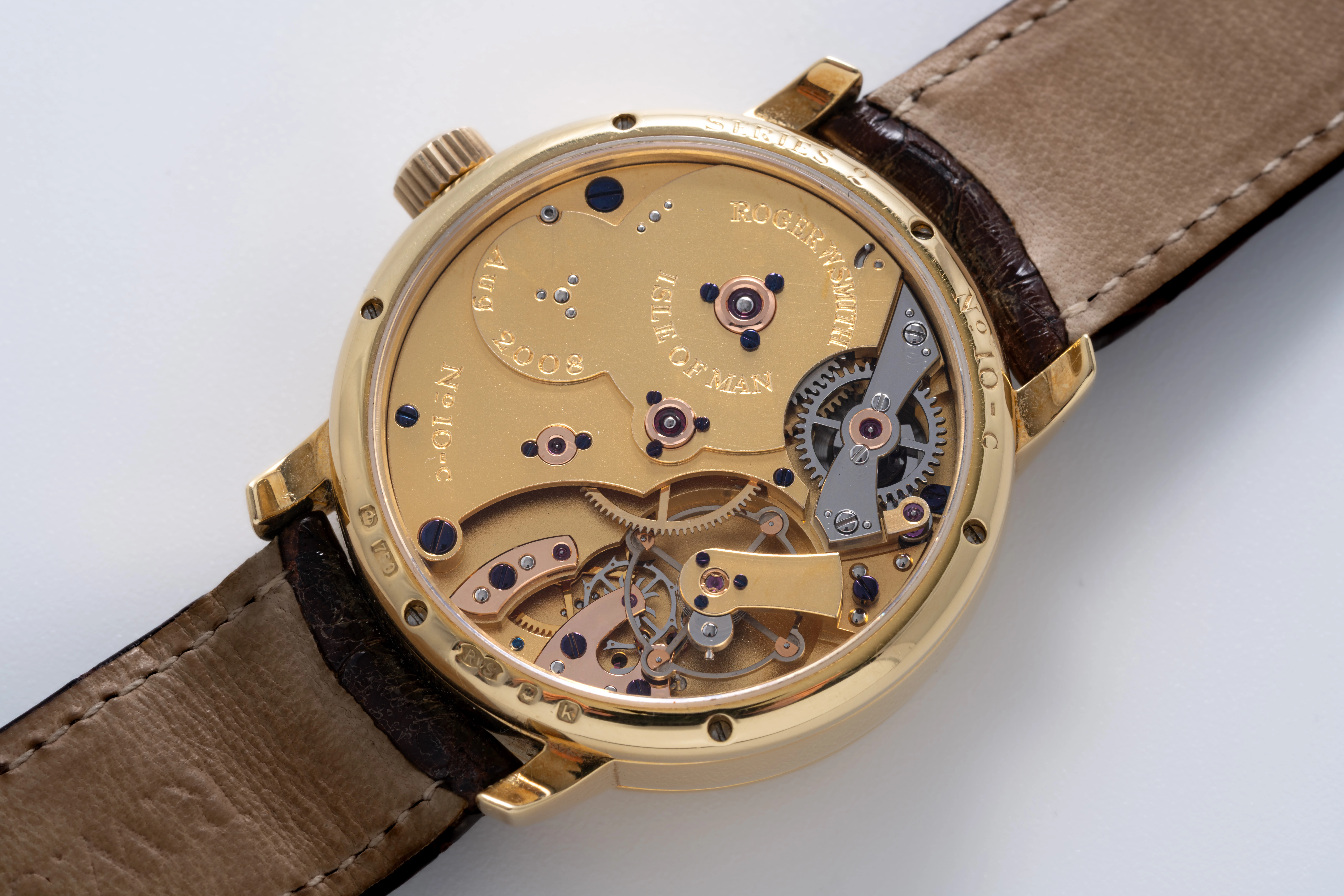
This Series 2 in yellow gold is one of the earliest watches in this edition, its movement engraved with serial number 10, making it a highly prized timepiece from Roger W. Smith’s early period. After producing the first Series 2 watches, in 2008 Mr Smith decided to limit production of this model to three Editions, totalling 90 pieces — 30 in each gold color. However, as customers preferred custom-made watches, he soon abandoned the Edition concept, ultimately releasing only five pieces each in yellow (Series 2 Edition 1), rose (Edition 2), and white gold (Edition 3).
REASONS TO BUY
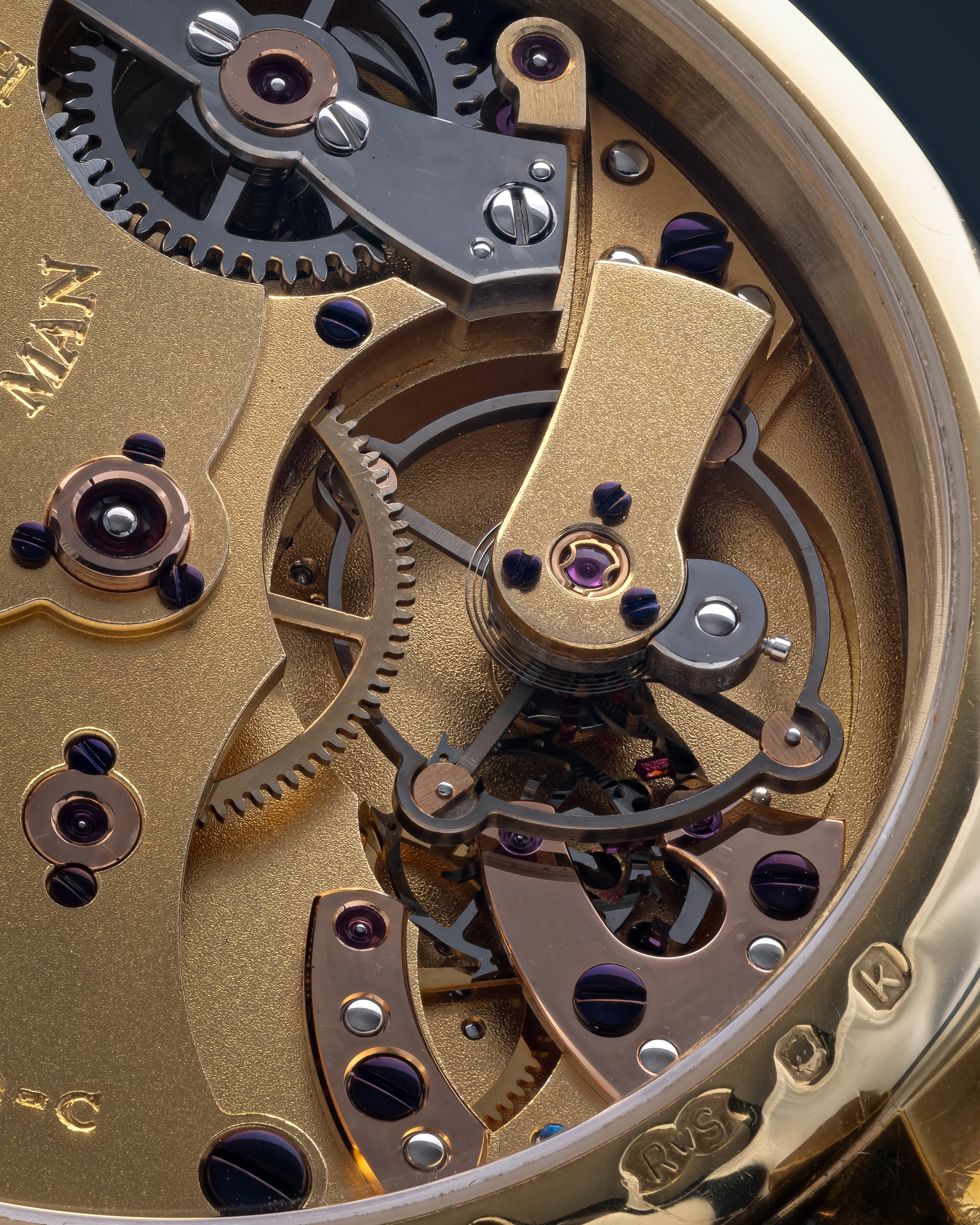
In the early Series 2 watches, including this one, Mr Smith used the original Daniels co-axial escapement design with a double escape wheel, consisting of two stacked wheels on one pinion, as envisioned in Daniels’s design. In 2010, Mr Smith replaced the double escape wheel with a single one, referring to this escapement as Version 1. A further modification followed in 2012, when the Version 2 escapement was introduced, featuring an escape wheel with very long teeth and no rim. The transition to the Version 3 escapement, which reduced the escape wheel diameter from 6 mm to 4.5 mm, occurred in 2014. One of the main goals of these modifications was to reduce the moment of inertia of the escape wheel, which generally aligns with the technical evolution of the Daniels co-axial escapement in Omega watches. In a significant number of late Series 2 pieces, Mr Smith abandoned the original austere, technical appearance of the calibre in favour of a more decorative look, with hand-engraved finishes on the barrel bridge and the balance cock.
The Roger W. Smith Series 2 is one of the rarest modern watches produced in series, even by the standards of independent watchmakers: only 60 pieces are known to have been issued between 2007 and 2019, before Mr Smith introduced the Series 2 with the upgraded Mark 2 movement. Produced using traditional handcrafted techniques, each watch, including this example, is essentially unique. Notably, this Series 2 in yellow gold is one of the earliest examples, its movement engraved with serial number 10, making it a highly valuable early Roger W. Smith timepiece. The Series 2 has defined the concept of modern, English-made collectible watches, giving this watch both historical significance and considerable collector appeal.
ABOUT THIS WATCH
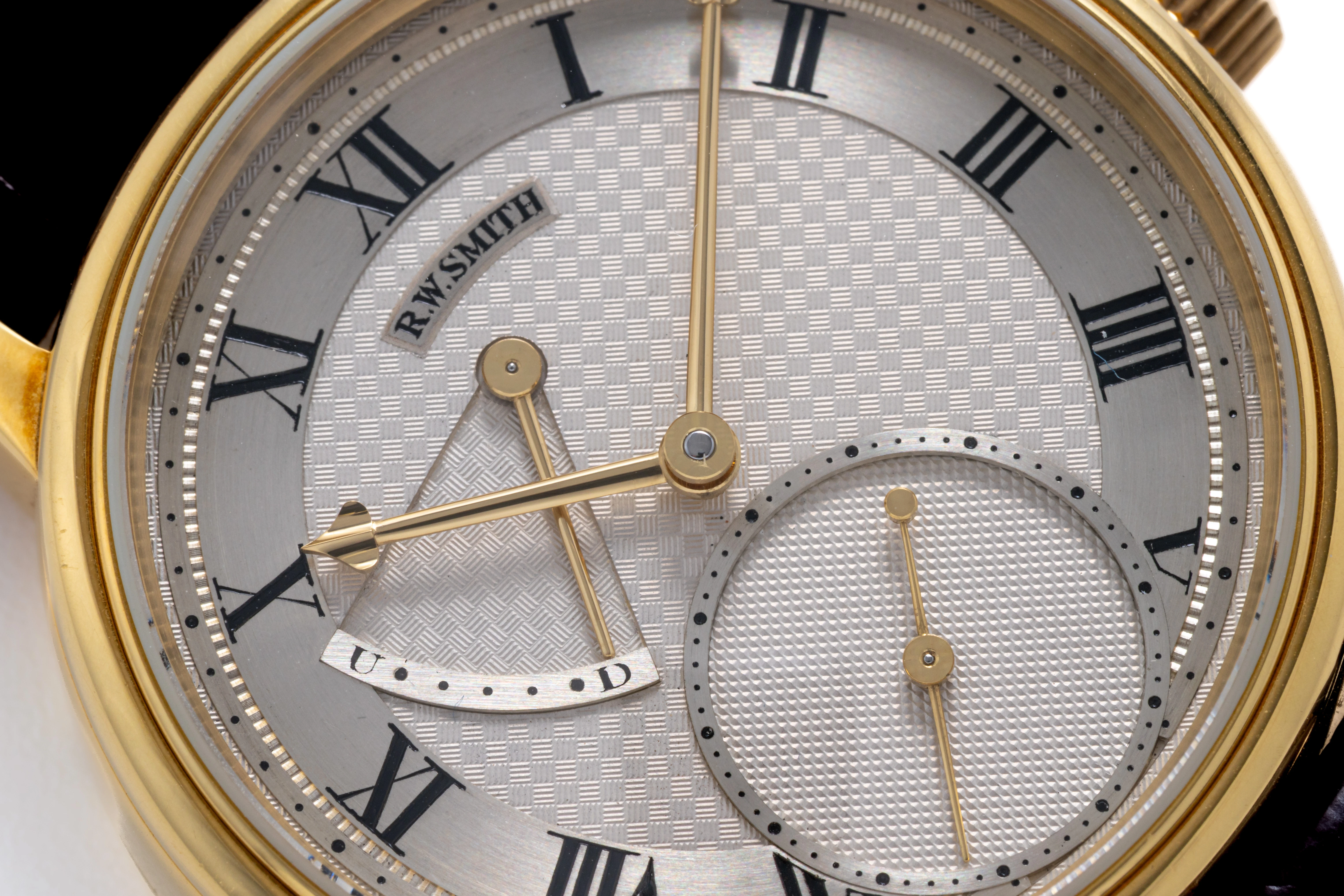
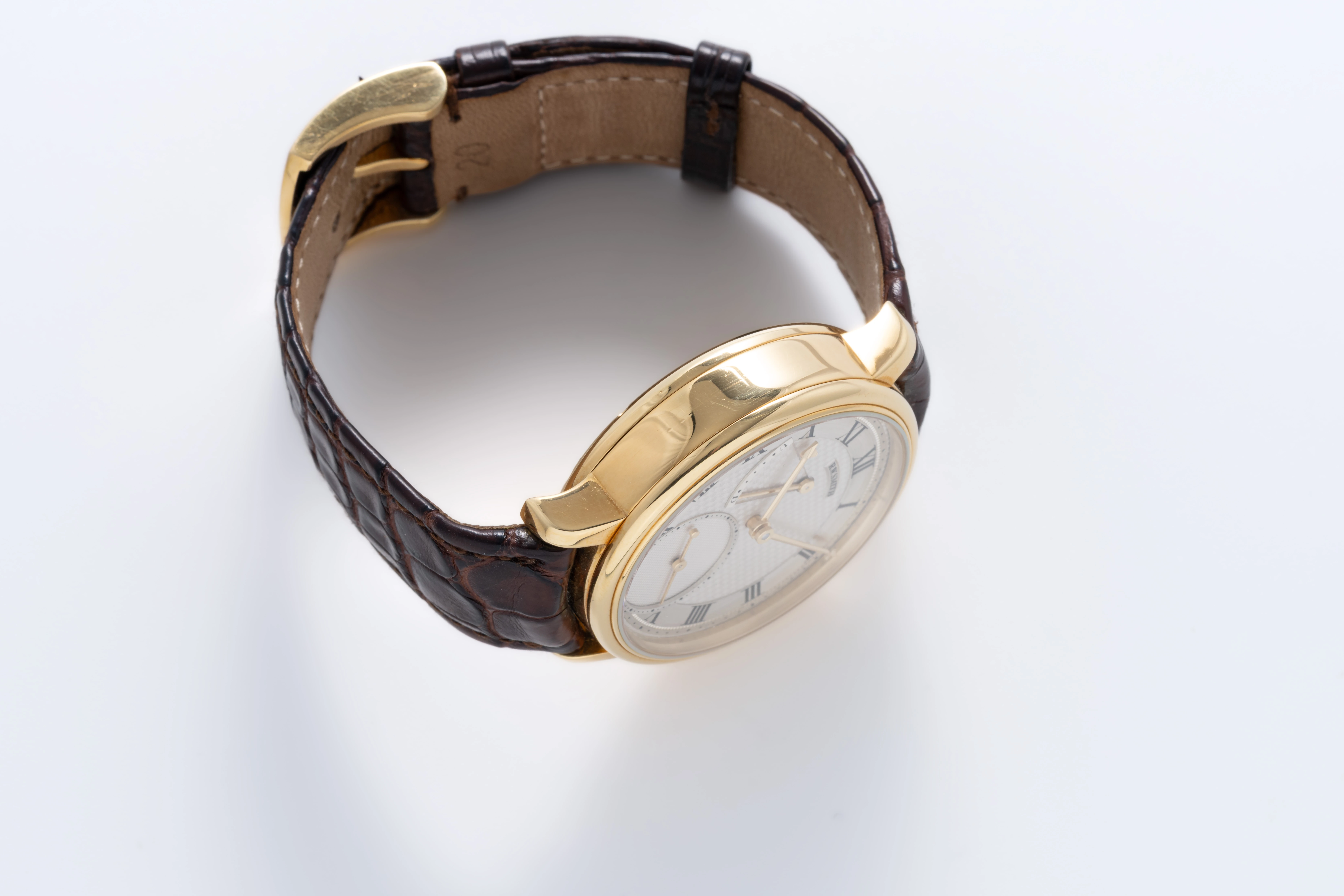
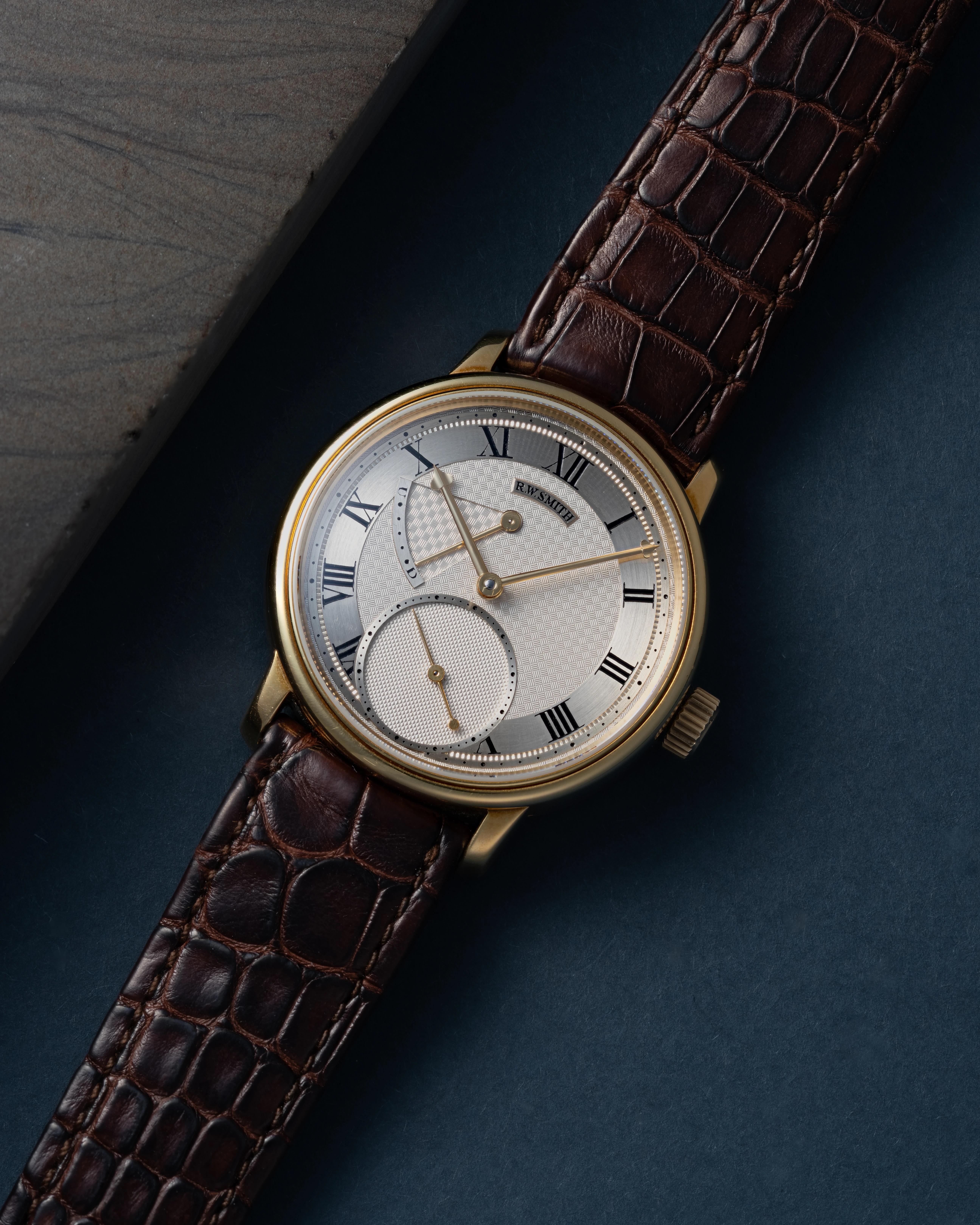
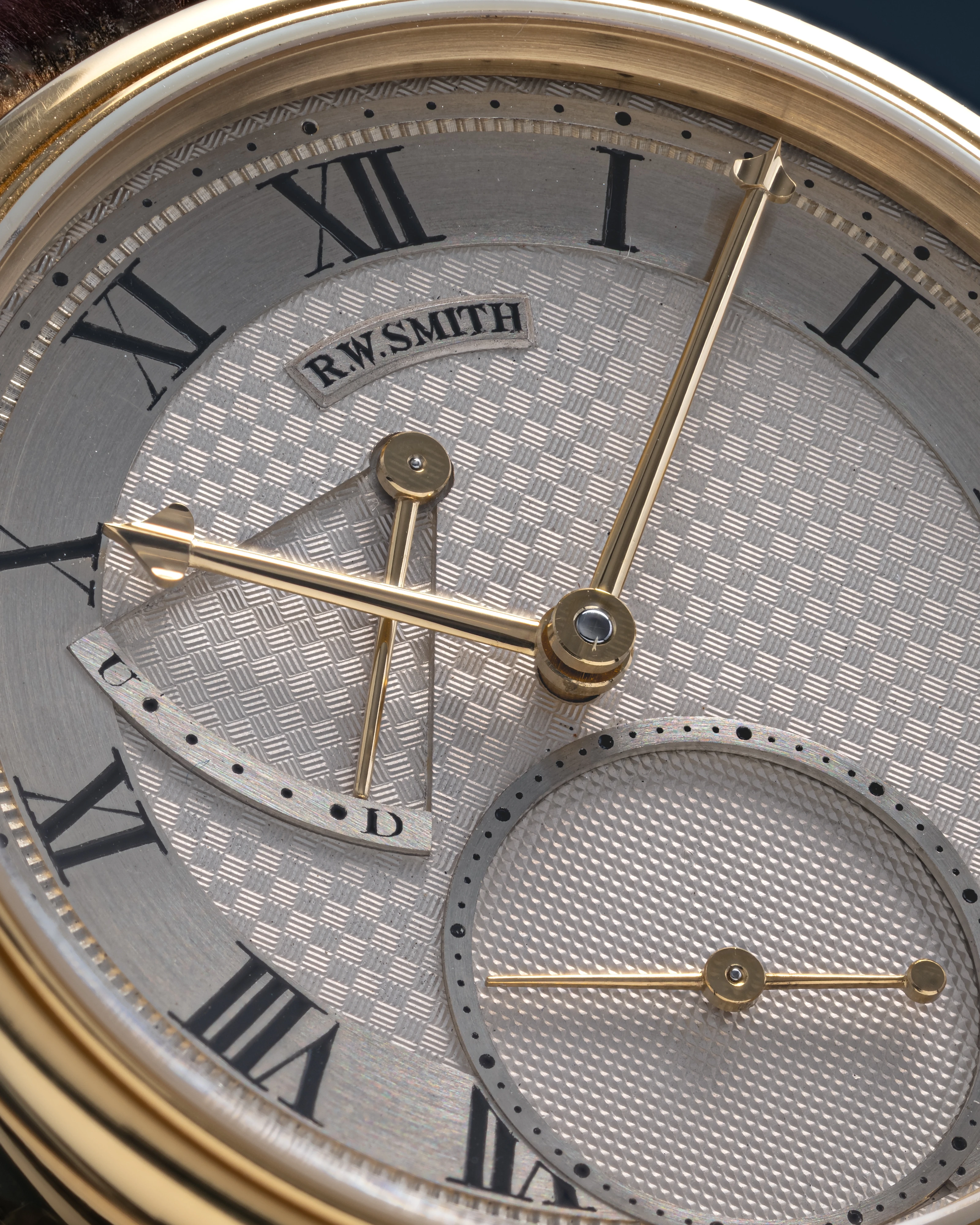
Upon closer inspection of this Series 2 watch, one can discern the distinctive details characteristic of early Roger W. Smith production, illustrating the exceptional use of handcraft. In this context, some imperfections visible under high magnification in the fine details of the finish – such as the slightly uneven way the varnish has filled the engraved numerals and lettering – appear more as virtues and testaments to the craftsmanship than as flaws. Even more significantly, in the early Series 2 watches, Mr Smith established the hallmarks of his signature style, which he maintains to this day. On the dial, this includes a three-dimensional structure with a raised chapter ring, as well as the power reserve and small seconds scales, accentuated by hand-crafted vieux panier and clous de Paris guilloché patterns, which create a soft, ethereal glow.
The solid gold hands, which appear massive, deserve special mention as a unique feature of Mr Smith’s watches. The distinctly three-dimensional shape of the hand corps and the heart-shaped point clearly reference the hands of English and other pocket watches produced in the 17th century and earlier, when the hands were turned on a lathe and then finished by hand. The tips of the hands perfectly follow the markings on the respective scales – a sensible rule not always observed by modern watch designers.
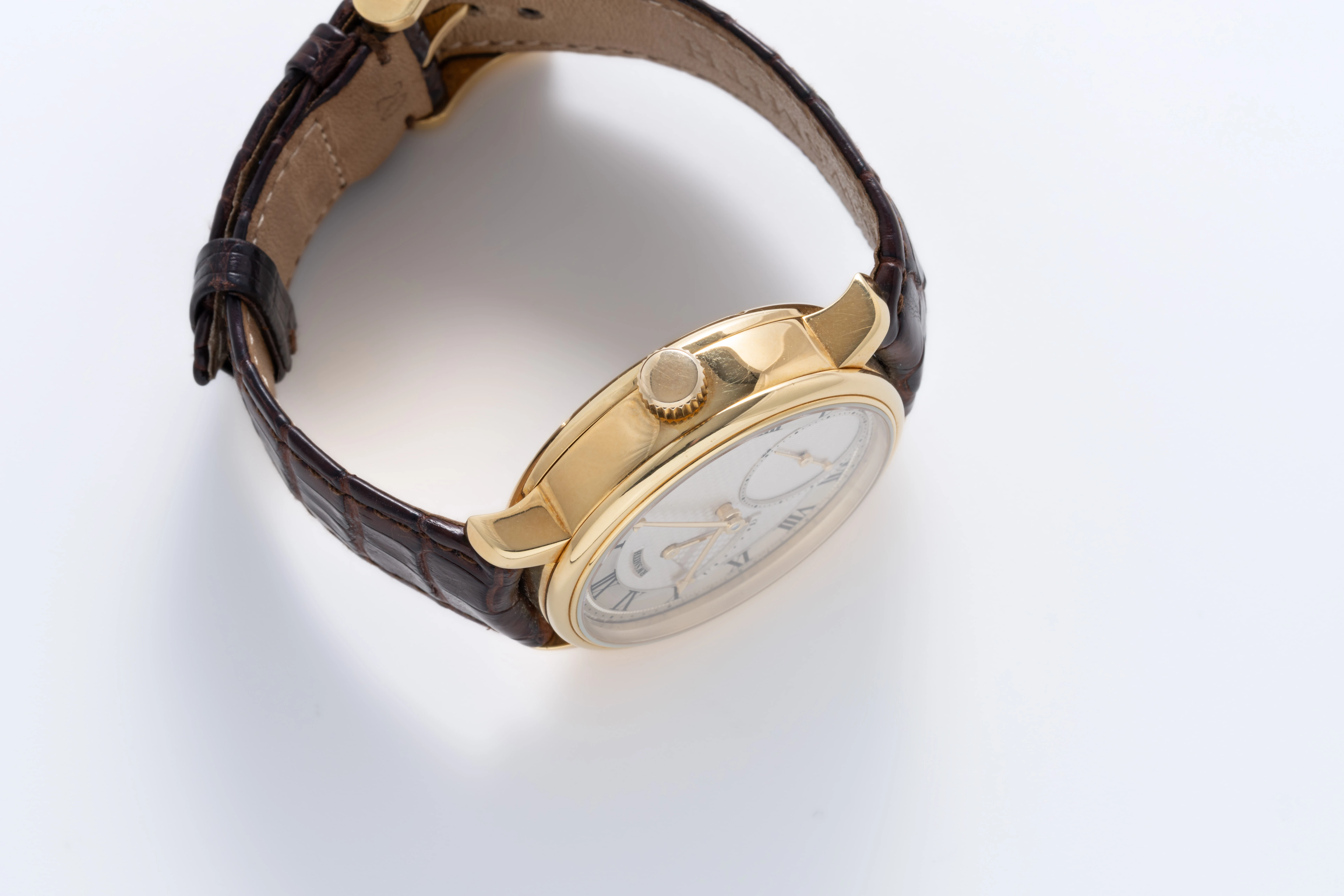
The 18k yellow gold case of this Series 2 watch is drum-shaped, flowing smoothly into the rounded edges of the bezel and caseback. The thin bezel of the 38mm case leaves ample room for the dial to appear spacious. The proportionally large crown is also cylindrical and features straight knurling. The relatively tall, short, and slightly tapered lugs, characteristic of early Roger W. Smith watches, convey a sense of solidity and reliability, as does the case as a whole – exactly Mr Smith’s intention when developing this design.
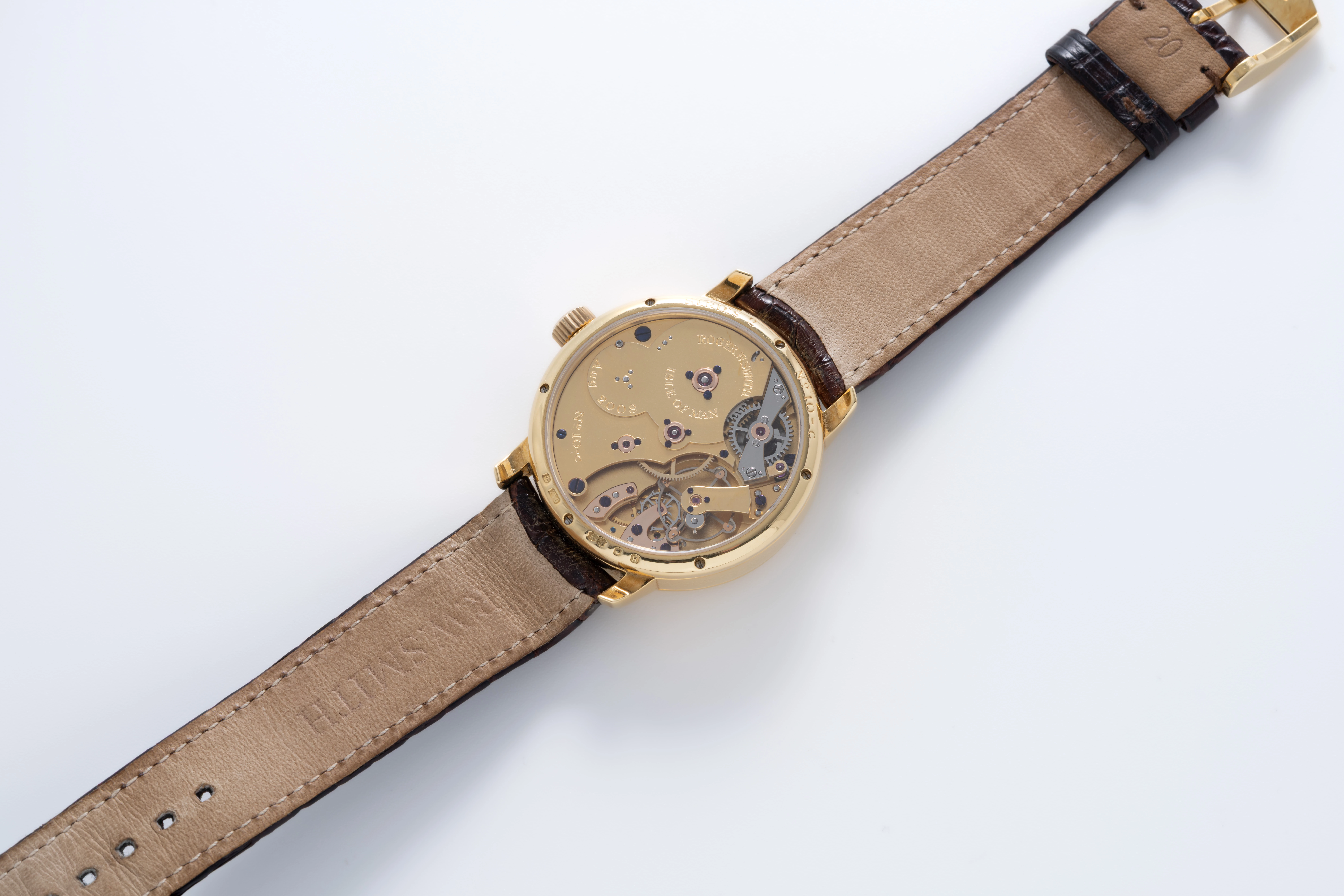
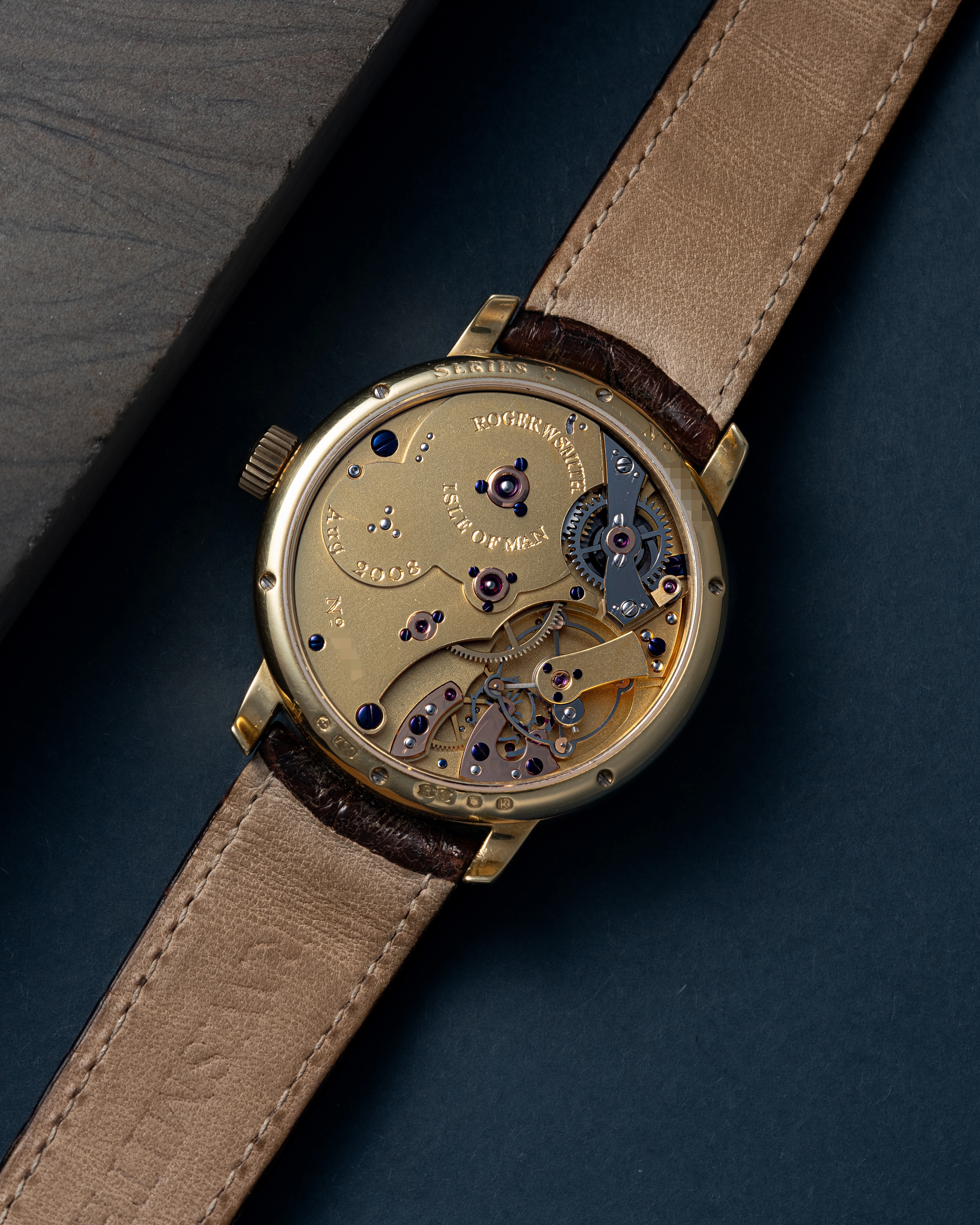
A glance at the movement reveals its English origins. The finish is traditionally English, with frosted gilded bridges and mainplate, large gold chatons, blued screws, hand-engraved inscriptions, and minimal beveling, without any garish polishing. This contrasts sharply with the more ornate Swiss style. The traditional two-thirds plate layout is harmoniously complemented by a large balance wheel with adjustable excentrics, while the steel power reserve bridge, escapement bridge, and fourth-wheel bridge cap – all with a spectacular black polish – impart a technical character to the movement, reminiscent of the finest English pocket chronometers of the 19th century. The rose gold plating of the escapement bridge and fourth-wheel bridge cap draws attention to the components of the co-axial escapement. Here, we find the double wheel version, typical of the early Series 2 watches.
This Series 2 watch was released in August 2008, as indicated by the engraving on the movement. The case diameter is 38 mm, and the very narrow bezel, compared to the 40 mm versions launched in 2010, gives the watch a refined, classic style, reducing the case’s presence on the wrist and emphasising the distinctive, inimitable Roger W. Smith dial.

Specifications
| Ref | 2 |
| D= | 38 mm |
| Glass | Sapphire crystal |
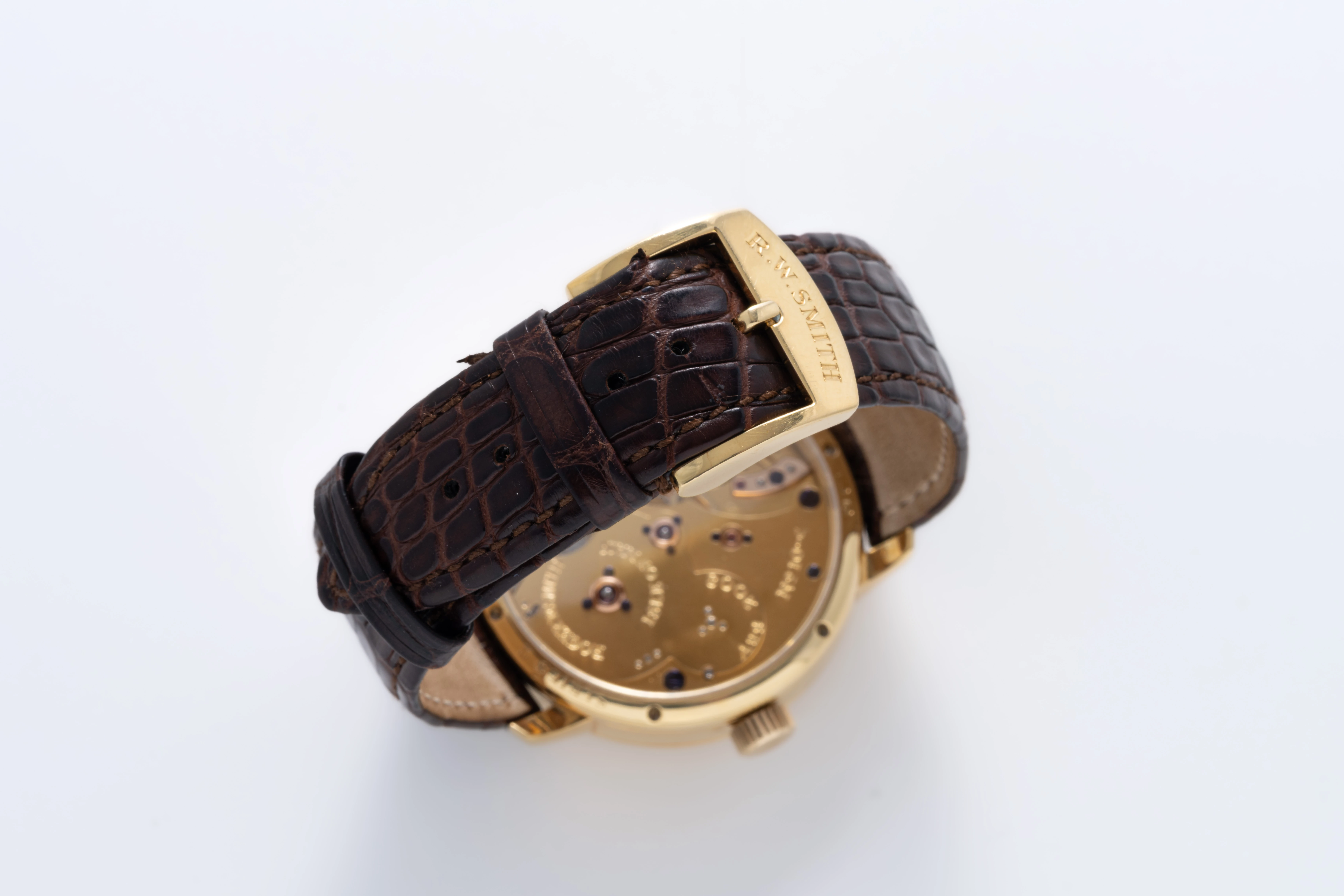
| Clasp | 18k yellow gold |
| Dial | Guilloché dial |
| Case material | 18k yellow gold |
| Year | 2008 |
| Movement | Manual winding |
| Color of Bracelet | Black alligator leather strap |
Condition report
| Box: | Yes |
| Papers: | Yes |
ADDITIONAL PHOTOS: